Best Compound Miter Saw for the Ultimate Cuts

We’ve all been there: You step into the store, you know exactly what you need… and then your head starts spinning.
There are so many miter saws to choose from – what is the best one?
Don’t worry, I’m here to help answer that question.
Let me show you how to find the ultimate cut in this very article!
How We Choose the Best Compound Miter Saws
Oh boy, choosing the best compound miter saws was no easy feat!
We scoured the market for saws with the perfect combination of power, precision, and versatility.
We made sure each saw had a smooth and accurate cutting action, a sturdy build quality, and enough features to keep even the most hardcore DIYers happy.
Plus, we kept our ears to the ground and listened to what real-life users had to say.
After all, the best reviews come from the people who have actually used the products.
It was a tough job, but someone had to do it.
And now, we’re thrilled to present to you our top picks for the best miter saws out there.
Overall Winner – Best Sliding Compound Miter Saw
BOSCH 12-Inch Dual-Bevel Sliding Compound Miter Saw (GCM12SD)
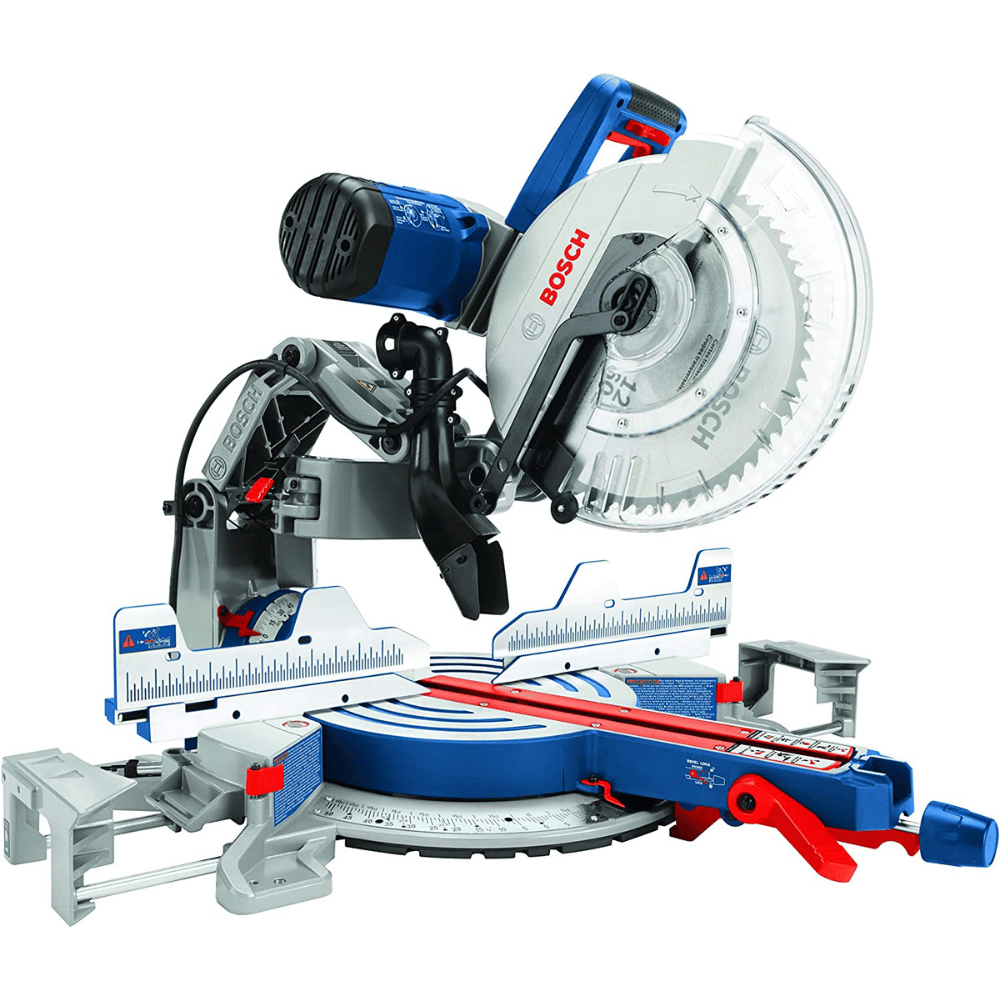
Key Features
- 15-amp motor good for 3,800 RPM
- 14-inch horizontal and 6-1/2-inch vertical capacity
- 0-45 degree bevel to the right and left
Why It’s a Great Choice
Calling all DIYers and professionals!
The BOSCH 12-Inch Dual-Bevel Sliding Compound Miter Saw is the perfect tool for your next project.
With its patented AXIAL GLIDE SYSTEM, you can enjoy wider cross-cuts and greater accuracy without taking up too much room in your workspace.
And with the convenient square lock quick-release fence, you’ll enjoy a fuss-free setup.
Plus, thanks to its large easy-to-read uniform bevel and stainless steel miter scales with marked detents and roof pitch angles, you can adjust to get the perfect angle every time – making sure that your projects come out looking top-notch!
So don’t wait any longer; get the BOSCH 12-Inch Dual-Bevel Sliding Compound Miter Saw in your arsenal and get creating today!
Best 12-Inch Single-Bevel Compound Miter Saw
DEWALT 12-Inch Single-Bevel Compound Miter Saw (DWS715)
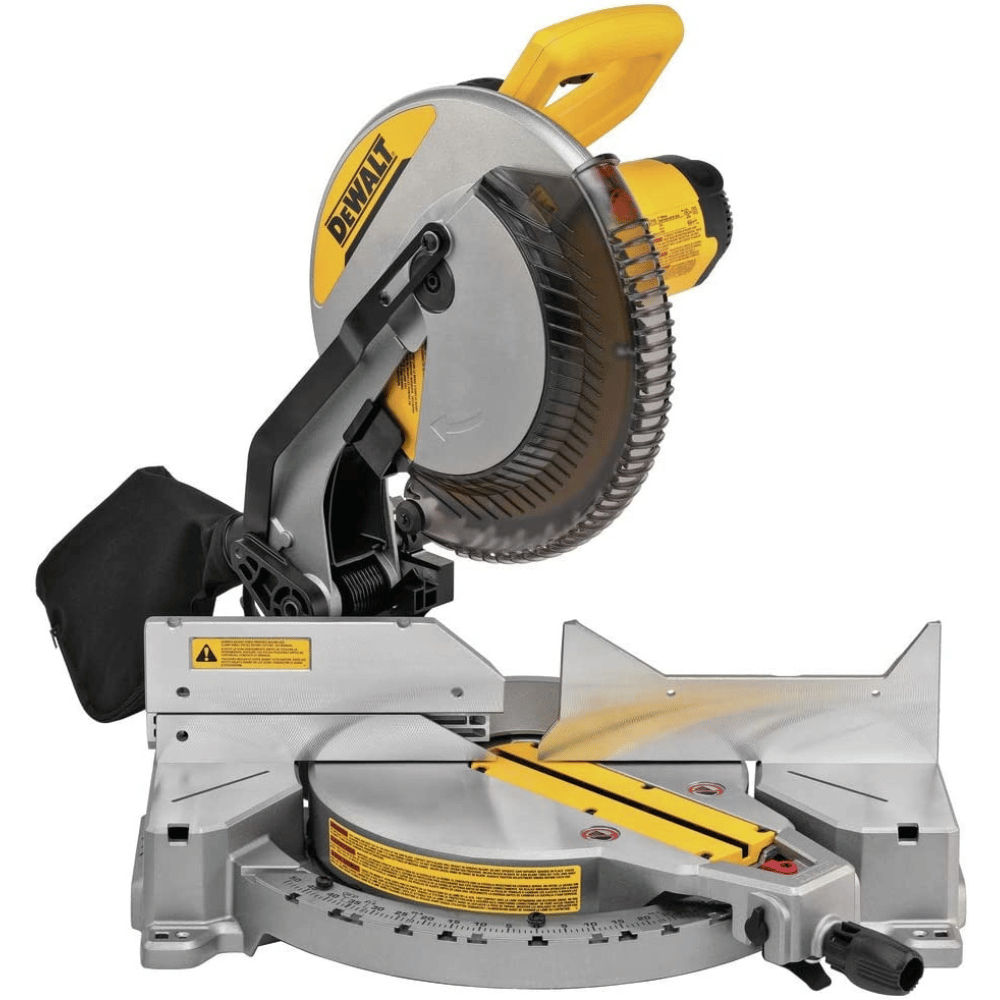
Key Features
- 15-amp motor good for 4,000 RPM
- 8-inch horizontal and 6-1/2-inch vertical capacity
- 0-48 degree bevel to the left
Why It’s a Great Choice
The DEWALT 12-Inch Single-Bevel Compound Miter Saw will make DIYers and professionals alike reach for their toolboxes—this saw is a cut above the rest!
With its stainless-steel miter detent plate and 12-inch miter saw blade, its durable enough to handle any job you throw at it.
Plus it has 14 positive miter stops that ensure accuracy on every cut.
The precise miter system and machined base fence support offer options such as tall sliding fences with the ability to support a 5-1/2-inch base vertically.
The blade bevels 48 degrees to the left and 3 degrees to the right to deliver time and time again in accuracy and performance.
Crafted for those tougher jobs, this miter saw features a 2-inch x 8-inch dimensional lumber cross-cut capacity at 90 degrees, and a 2-inch x 6-inch capacity at 45 degrees; giving you the confidence you need when tackling those heavy-duty projects.
The DEWALT 12” single bevel compound miter saw is designed with precision engineering making this plunger every tradesman’s go-to.
Best Budget Miter Saw
Metabo HPT 10-Inch Compound Single-Bevel Miter Saw (C10FCGS)
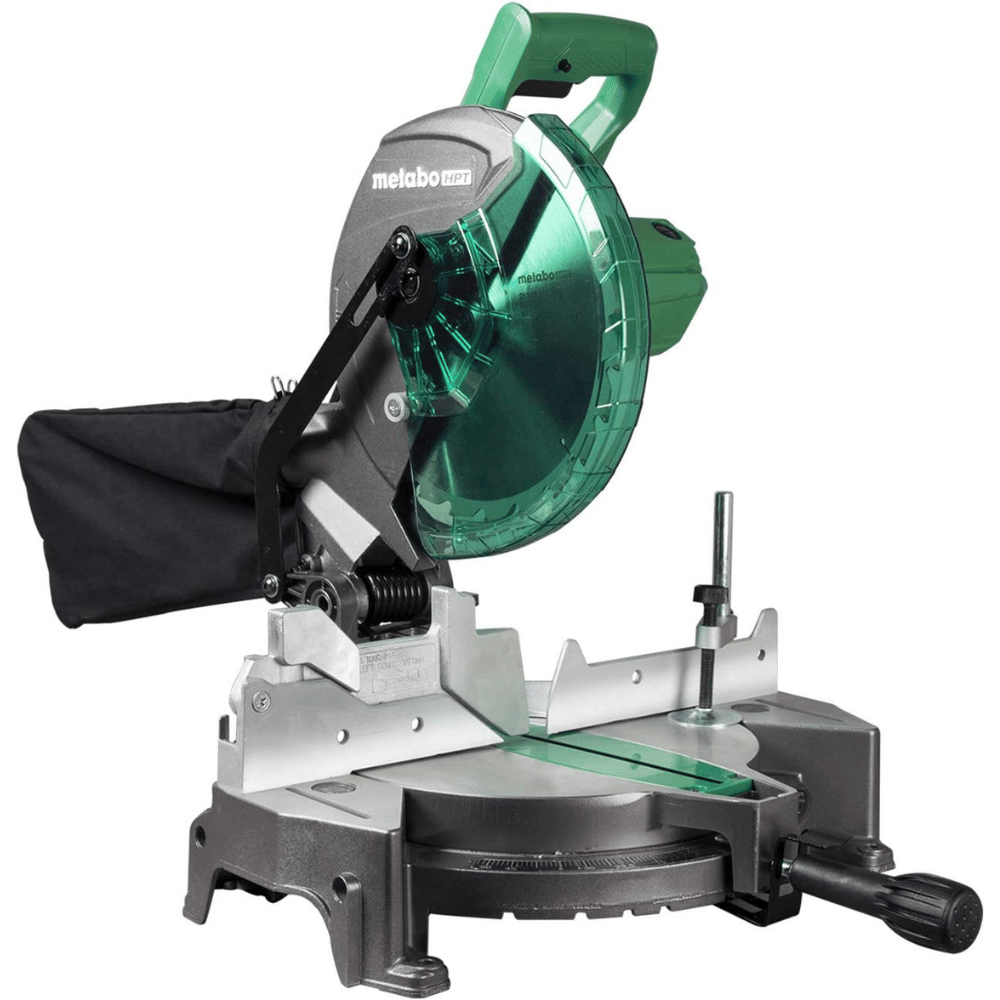
Key Features
- 15-amp motor good for 5,000 RPM
- 2-5/16″ x 5-21/32″ cut capacity at 90°
- 0-45 degree bevel to the left
Why It’s a Great Choice
Are you done using the same old saw over and over again?
It’s time to upgrade with the Metabo HPT 10-Inch Compound Single-Bevel Miter Saw!
This powerhouse of a tool has a 15 Amp motor that will make even the toughest of cuts look like a piece of cake.
Plus, it only weighs 24.2 lbs., so you can wheel it around or even work on projects in different places.
Now you won’t be confined to one space.
Equipped with a large table and vice clamping system, this miter saw makes sure your workpiece remains safe and secure from start to finish.
And with the electric brake, any inadvertent mishaps are no longer an issue – the blade will halt in seconds preventing further harm.
So if you want to get neat, clean, and accurate cuts for DIY projects or professional endeavors, equip yourself with the Metabo HPT 10-Inch Compound Single-Bevel Miter Saw!
And who knows?
You may even have some fun while operating one of these clever monsters!
Best Multi-Material Miter Saw
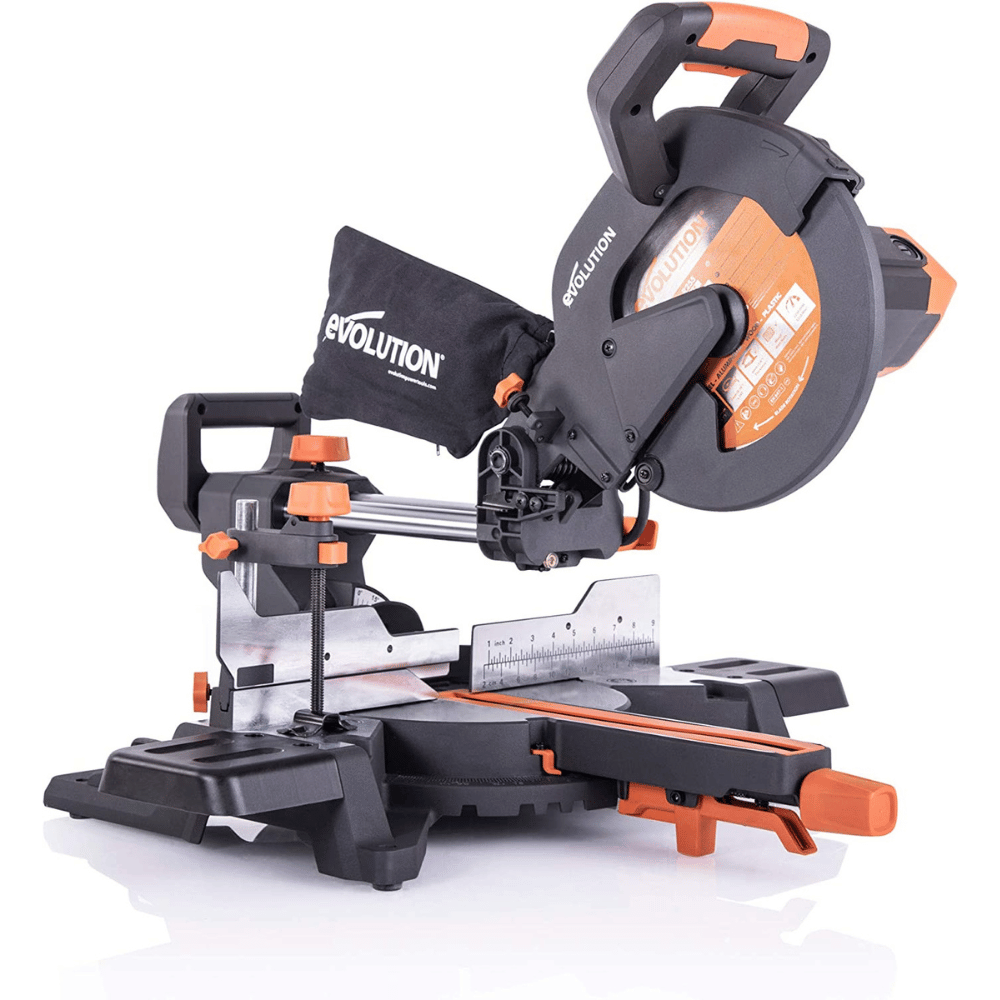
Evolution Power Tools 10-Inch Multi-Material Compound Sliding Miter Saw (R255SMS)
Key Features
- 15-amp motor good for 2,500 RPM
- 11-3/16″ x 3-9/16″ cross-cut capacity
- 0-45 degree bevel to the left
Why It’s a Great Choice
Let’s face it, sometimes renovations can be frustrating.
That’s why it’s time you upgrade to the Evolution Power Tools 10-Inch Multi-Material Compound Sliding Miter Saw.
This futuristic saw is not just the perfect addition for any DIYer but for anyone looking for a saw that works hard and plays harder.
It features a tungsten-carbide-tipped circular saw blade designed to power through a wide range of materials without having to switch blades – allowing you to tackle more projects in less time.
With its impressive hi-torque motor, 15 amp saw, adjustable depth, and laser Precision Guidance, you’ll get clean and precise cuts every single time.
Cut with precision within +/- 0.5 degrees with up to 0-45 degree bevel tilt and 50-50 degree miter angles along with quick click miter stops at 0°, 15°, 22.5°, 30°, and 45° on both the left and right side – cutting through up to 1/8″ mild steel!
Forget about pesky renovation tasks slowing down your workflow – revolutionize your project time today with the Evolution Power Tools 10-Inch Multi-Material Compound Sliding Miter Saw!
Best Professional Grade Sliding Compound Miter Saw
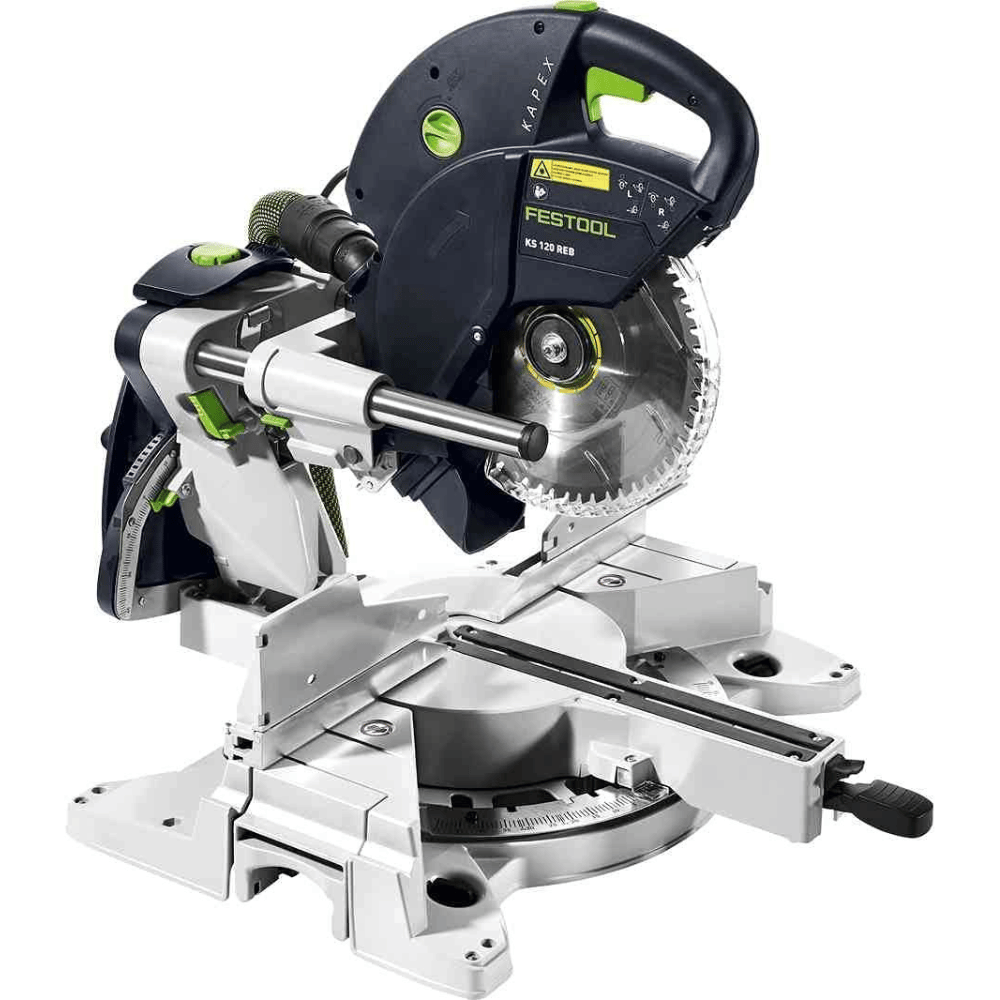
Festool Kapex Sliding Compound Miter Saw KS 120 REB (575306)
Key Features
- 1,600-watt direct drive motor
- 6-5/8-inch nested crown capacity
- 0-45 degree bevel to the right and left
Why It’s a Great Choice
The Festool Kapex Sliding Compound Miter Saw is the perfect saw for any DIYer or professional looking to make their project stand out.
You’ll be able to quickly and easily align cuts and see exactly where your material will be removed with the dual lasers.
And when you do take the plunge, you can rest assured that the Micro-adjustable bevel angle with an up-front rotary knob makes the Festool one of the most accurate miter saws out there.
Even better, setting those angles is a cinch thanks to a large bevel scale and fine pointers.
Plus, the FastFix blade change system ensures you don’t have to fiddle around when swapping blades out with one hand.
If that weren’t enough, why not have the ability to make quick accurate dadoes with its special trenching capability for a custom finish?
We mean it when we say this saw has it all — so what are you waiting for?
Get ready to make your next project truly shine with the Festool Kapex Sliding Compound Miter Saw!
Buyer’s Guide to the Best Compound Miter Saws
Are you a woodworking enthusiast who’s tired of uneven and wonky cuts?
Do you dream of perfectly angled corners and seamless joints?
Well, fear not, because we’ve got the ultimate FAQ section for all your compound miter saw needs!
So sit back, relax, and let us guide you through the ins and outs of this powerful tool.
Who knows, you might even become the talk of the town (or at least the talk of your DIY group chat).
What is a compound miter saw?
A compound miter saw is a power tool used for making precise crosscuts and angled cuts in various types of materials, typically wood, such as crown molding, baseboards, and other decorative trims. It allows the user to tilt the saw blade to make bevel cuts and also rotate the saw blade to make miter cuts, which makes it a versatile tool for a wide range of woodworking and DIY projects. Miter saws come in different sizes, with larger ones capable of making wider cuts and handling thicker materials.
What are the benefits of using a compound miter saw?
There are several benefits of using a compound miter saw, including:
- Precision: A compound miter saw allows for precise, accurate cuts with its ability to adjust the blade angle and miter angle.
- Versatility: Compound saws are versatile, allowing users to make a variety of cuts, including bevel, miter, and compound cuts.
- Efficiency: With a compound miter saw, users can quickly and easily make accurate cuts, saving time and effort compared to manual sawing or other types of saws.
- Safety: Many compound saws come equipped with safety features, such as blade guards and automatic shut-off, making them safer to use than traditional saws.
- Clean Cuts: Compound saws produce clean, smooth cuts, reducing the need for sanding or finishing work after cutting.
Overall, compound miter saws offer a combination of precision, versatility, efficiency, and safety, making them a valuable tool for DIYers and professionals alike.
How is a compound miter saw different from a regular miter saw?
A compound miter saw differs from a regular miter saw in that it can tilt the blade in addition to rotating it. This allows the user to make bevel cuts in addition to miter cuts. A regular miter saw can only make a miter cut, which is a cut made at an angle across the width of a board, while a compound miter saw can make both bevel and miter cuts. Compound saws are more versatile and can handle a wider range of cuts and projects than regular miter saws.
What are sliding compound miter saws?
A sliding compound miter saw is a type of miter saw that allows you to make crosscuts and angled cuts with a sliding motion. The sliding feature allows you to move the saw head forward and backward along sliding rails, which extends the cutting capacity of the saw and allows you to make wider cuts.
In addition to the sliding feature, sliding miter saws also can make bevel cuts in addition to miter cuts. This means you can tilt the saw blade to create angled cuts along the thickness of the material being cut.
Sliding compound miter saws are commonly used for making precise and accurate cuts on a wide variety of materials, including wood, plastic, and aluminum. They are ideal for cutting trim work, molding, and other precision work where accuracy is important.
However, because of their advanced features and capabilities, sliding miter saws are typically more expensive than non-sliding models. They also tend to be heavier and larger, so they may not be as portable or easy to move around as non-sliding miter saws.
What are the different types of compound miter saws?
There are two main types of compound miter saws: single bevel and dual bevel.
- Single bevel miter saws: These saws can tilt the blade only in one direction, typically to the left, allowing the user to make bevel cuts in one direction only. Single bevel saws are generally less expensive than dual bevel saws and are suitable for most DIYers and casual woodworkers.
- Dual bevel miter saws: These saws can tilt the blade in both directions, to the left and right, which allows for more flexibility and ease of use when making bevel cuts. Dual bevel saws are typically more expensive than single bevel saws and are commonly used by professionals or serious woodworkers who need to make precise cuts with speed and efficiency.
Both types of miter saws can also vary in blade size, power, and features, so it’s important to consider your specific needs and intended uses when selecting a saw.
What types of cuts can I make with a compound miter saw?
With a compound miter saw you can make a variety of cuts, including:
- Miter cuts: These are angled cuts made across the width of a board.
- Bevel cuts: These are angled cuts made through the thickness of a board.
- Compound cuts: These are cuts that combine both miter and bevel angles.
- Crosscuts: These are straight cuts made across the width of a board.
- Rip cuts: These are straight cuts made along the length of a board.
Overall, compound miter saws are versatile tools that can handle a wide range of cuts and projects, making them a valuable addition to any woodworking or DIY toolkit.
Are there cordless miter saws?
Yes, there are cordless miter saws available on the market. Cordless miter saws are powered by rechargeable batteries, which allow you to use them without being tethered to an electrical outlet. This can be particularly useful for job sites or projects where access to power outlets is limited or not available.
Cordless saws are typically equipped with lightweight, lithium-ion batteries, recharge quickly, and have a longer runtime compared to other types of batteries. The battery power also provides the same level of performance as corded models, allowing you to make accurate and precise cuts.
One potential downside of cordless saws is that they may have a shorter runtime compared to corded models, and the batteries may need to be recharged more frequently. Additionally, cordless models can be more expensive than corded models and may not have as much power as corded models.
Overall, cordless miter saws can be a great option for those who value portability and flexibility, but it’s important to consider the potential limitations and trade-offs before making a purchase.
How do I adjust the bevel angle on my compound miter saw?
To adjust the bevel angle on your miter saw, follow these steps:
- Loosen the bevel lock knob located at the back of the saw, usually near the blade.
- Tilt the saw to the desired angle, using the bevel scale on the saw as a guide.
- Tighten the bevel lock knob to secure the saw at the desired angle.
- Check the angle with a square or angle gauge to ensure accuracy.
- Test the saw with a scrap piece of wood to confirm the angle is correct before making any cuts.
Remember to adjust the angle before making any bevel cuts, and to follow all manufacturer instructions and safety precautions when using your miter saw.
How do I adjust the miter angle on my miter saw?
To adjust the miter angle on your miter saw, follow these steps:
- Loosen the miter lock knob or handle located at the front or back of the saw, depending on the model.
- Rotate the saw to the desired angle, using the scale on the saw as a guide.
- Tighten the miter lock knob or handle to secure the saw at the desired angle.
- Check the angle with a square or angle gauge to ensure accuracy.
- Test the saw with a scrap piece of wood to confirm the angle is correct before making any cuts.
Note that some miter saws also have positive stops at common angles such as 15, 22.5, and 45 degrees, which can help make adjustments easier and faster. Remember to adjust the angle before making any miter cuts, and to follow all manufacturer instructions and safety precautions when using your miter saw.
Can I use a compound miter saw to cut metal or other materials besides wood?
While compound miter saws are primarily designed for cutting wood, some models may also be capable of cutting other materials such as plastic or aluminum, depending on the blade being used and the saw’s power and speed capabilities.
However, it’s important to note that cutting materials other than wood can be potentially dangerous and can cause damage to the saw. Also, using the wrong type of blade or attempting to cut materials that are too thick or hard can cause the blade to break or the saw to malfunction, leading to potential injury or damage.
It’s recommended to only use your miter saw for cutting wood, and to consult the manufacturer’s instructions and safety guidelines before attempting to cut any other materials. If you need to cut other materials, it’s best to use a specialized saw or blade designed for that specific material.
What features should I look for when choosing a compound miter saw?
When choosing a compound miter saw, there are several features to consider, including:
- Blade size: Most miter saws come in blade sizes of 10 or 12 inches, with larger blades able to make longer cuts and handle thicker materials.
- Motor power: Look for a saw with a powerful motor that can handle the types of cuts you need to make and the materials you’ll be working with.
- Bevel and miter range: Look for a saw that offers a wide range of bevel and miter angles, allowing you to make a variety of cuts.
- Positive stops: Some saws feature positive stops at common angles, which can make it easier and faster to adjust the saw to the desired angle.
- Laser guide: A laser guide can help you make more accurate cuts by indicating where the blade will make contact with the material.
- Sliding capabilities: Sliding compound miter saws provide extra cut capacity as the blade slides back and forth on a track.
- Dust collection system: Look for a saw with a dust collection system to help keep your workspace clean and free of debris.
- Size and weight: Consider the size and weight of the saw, as well as its portability and ease of use, especially if you need to move it around frequently or work in different locations.
- Brand and reputation: Consider the reputation of the manufacturer and read reviews from other users to ensure that the saw is durable and reliable.
By considering these features and your specific needs, you can choose a compound miter saw that will meet your requirements and help you achieve professional-quality results.
What safety features should I look for when choosing a compound miter saw?
Safety is a top priority when using power tools like compound miter saws. When choosing a miter saw, look for the following safety features:
- Blade guard: A blade guard covers the blade when it’s not in use and moves out of the way when the saw is lowered for a cut. It helps prevent accidental contact with the blade and can reduce the risk of injury.
- Electric brake: An electric brake can stop the blade quickly when the trigger is released, reducing the risk of injury from the blade continuing to spin after a cut.
- Lockout switch: A lockout switch prevents the saw from accidentally turning on, which can help prevent injuries.
- Fence: A fence helps keep the material being cut in place and reduces the risk of kickback or other accidents.
- Safety switch: A safety switch requires a separate action, such as pressing a button or flipping a switch, before the saw can be turned on.
- Anti-slip material: Some saws have anti-slip material on the base or feet to help keep the saw stable during use.
- Dust collection system: A dust collection system can help keep the work area clean and reduce the risk of respiratory issues from inhaling sawdust.
- User manual: Make sure to read and follow the user manual provided by the manufacturer for your miter saw, which will have specific safety instructions and precautions.
By choosing a miter saw with these safety features and following all manufacturer instructions and safety guidelines, you can help prevent accidents and ensure safe and efficient use of the saw.
Choosing the Best Compound Miter Saw for You
When it comes to finding the perfect compound miter saw, you don’t have to spend hours searching the web trying to find your ideal tool.
With our in-depth research and top choices, you’ll be making cuts in no time.
You can rely on any of the above miter saws for precision, accuracy, and long-life utilization, which makes them some of the best in the market.
We have provided several options for a variety of budgets so regardless if you are inexperienced or a pro carpenter, there is something suitable for you!
Don’t wait any longer… click the links, check out prices on Amazon, and get on with your next big project!
Keep cutting until all your DIY dreams come true!