Best Drywall Sander for Walls as Smooth as Silk

If you’ve ever completed a drywall job, you know just how much time and effort it takes to make sure the wall is smooth and even.
Even if you’re a pro at taping and mudding, sanding can seem daunting – but with the right tools and some tips from experienced DIYers, that perfect finish doesn’t have to be as difficult as it may seem!
In this article, we’ll look at different kinds of drywall sanders to find one that is best for your project – enabling you to get silky-smooth results without losing your sanity in the process.
How We Choose the Best Drywall Sanders
Sanding drywall is a time-consuming and messy job.
And choosing the right drywall sanding tools can be really confusing.
You don’t want to get stuck with a dud that doesn’t deliver the results you need – because that means more time wasted and more money down the drain!
But don’t worry, we got your back.
We read through thousands of reviews on Amazon and compared the features and specs of the top brands to narrow it down to the best electric drywall sanders – so you can be sure you’ll get exactly what you need, without wasting any extra time or money.
Overall Winner – Best Cordless Drywall Sander
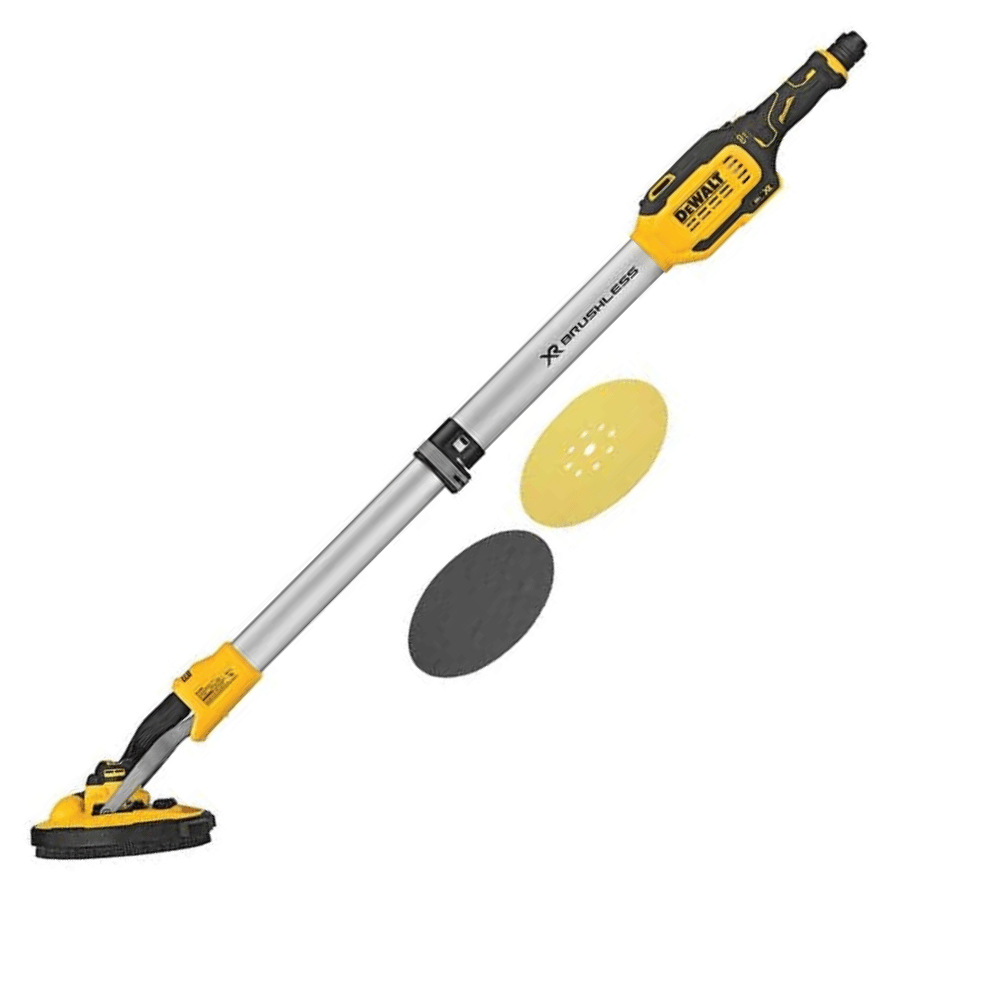
DeWALT 20V MAX Cordless Drywall Sander (DCE800B)
Key Features
- Brushless 20V motor
- Variable speed control with 7 settings between 700 – 1,200 RPM
- 9-inch sanding head
Why It’s a Great Choice
Are you ready to revolutionize your drywall sanding experience?
Welcome the DeWALT 20V MAX Cordless Drywall Sander.
This innovative system is designed with the DIYer and professional alike in mind, allowing you to easily tackle even those most challenging projects.
Plus, its brushless motor delivers increased reliability, durability, and speed consistency, giving your drywall sanding that extra edge you need!
And with a quick dust extractor connection, via The Airlock™ connection, you can be sure that harmful drywall dust stays out of the workplace.
The DCE800 also features wireless tool control for pairing with compatible DEWALT dust extractors, so you can wirelessly turn the extractors on and off during your project.
Don’t forget that it also has a telescoping shaft and articulating head allowing it to fit large and compact workspaces alike- genius!
So go ahead and add some pizazz to your next project with the user-friendly DeWalt 20V MAX Cordless Sander today!
Best Drywall Sander on a Budget
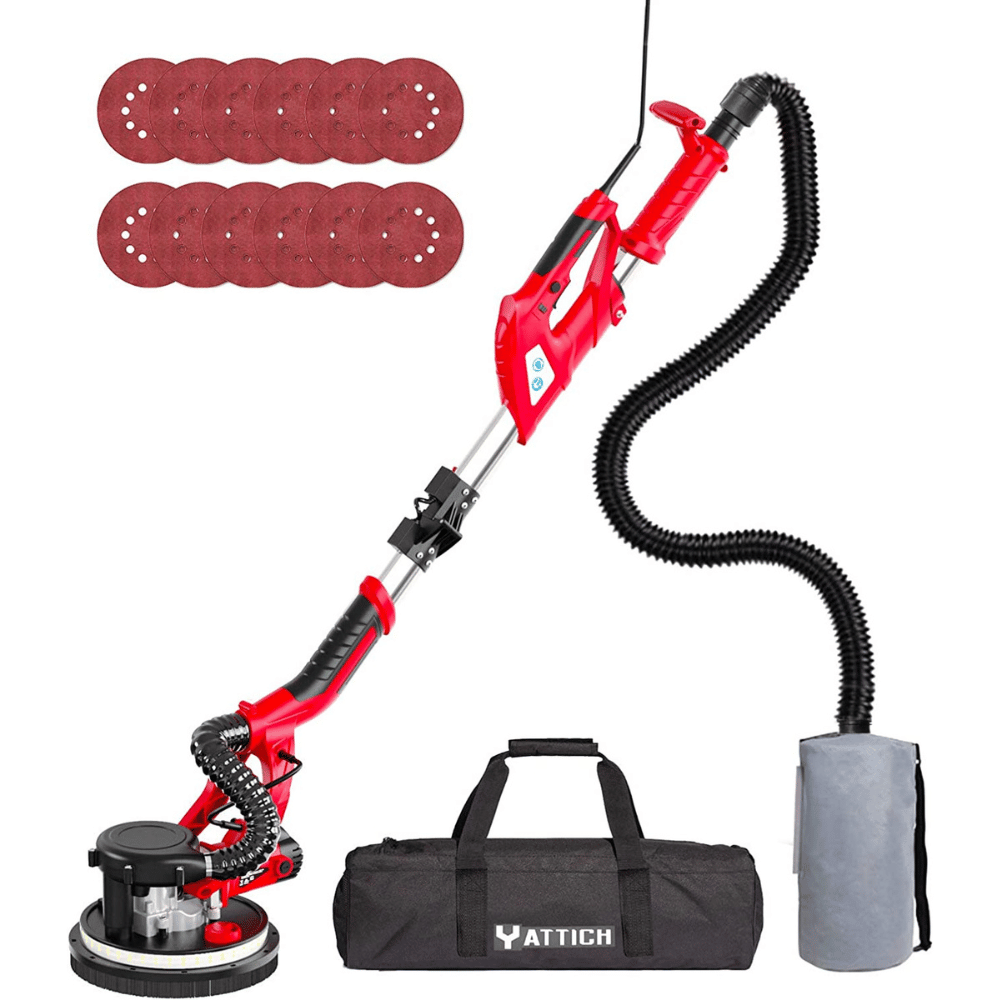
YATTICH Drywall Sander
Key Features
- 750W corded electric sander
- 7-level variable speed from 800 – 1,750 RPM
- Handle extends up to 5.5 ft.
Why It’s a Great Choice
Need to knock out a drywalling project but don’t want to kick up a cloud of dust?
With the YATTICH Drywall Sander you can make all your sanding dreams come true – without any of the dreaded dust!
Perfect for professionals and DIYers alike, this cordless sander features a dual hook tension spring to securely keep the head in place while you work on the ceiling.
Plus, with the suction power dial, you can adjust its perceived weight – which won’t leave your arm feeling like spaghetti at the end of the day.
And if you happen to be working in a dark workplace?
No worries!
This drywall beast comes equipped with double-deck LED strip lights so you can see where you’re sanding even in confined spaces.
Oh, and let’s not forget about the aluminum alloy extension rod that permits handle stretching from 3.9ft to 5.5ft – making those hard-to-reach places no problem for this bad boy.
On top of that magic wand, it also has a 6.5 ft hose and dust bag combo for some serious 90% dust absorption capabilities!
Don’t settle for dusty results ever again – make sanding easy on yourself (and easier on others’ noses) with the YATTICH Drywall Sander!
Best Cordless Drywall Sander for Comfort and Maneuverability
Makita 18V LXT Cordless Drywall Sander (XLS01ZX1)

Key Features
- 18V Brushless motor
- Variable speed selection from 1,000 to 1,800 RPM
- Extends up to 16-1/2″
Why It’s a Great Choice
For the perfectionist DIYer or the professional, it’s time to bring your drywall sanding up to speed!
The Makita 18V LXT Cordless Drywall Sander takes care of all those tough detailed jobs with its impressive features.
Its brushless motor allows for increased efficiency and minimized maintenance.
Plus, its round brush design is super effective at extracting dust, so there won’t be any mess left behind.
And when it comes to maneuverability?
I mean, talk about flexibility!
You can adjust the extension pipe for sanding around small corners and tight spaces or extend it out to 16-1/2″ for large wall areas.
Along with variable manual RPM adjustment from 1,000-1,800, you can rest assured that your sanding job will look smooth as butter in no time!
So don’t wait any longer to get your hands on this worker bee: let Makita make your life easy and get one today!
Best Variable Speed Drywall Sander
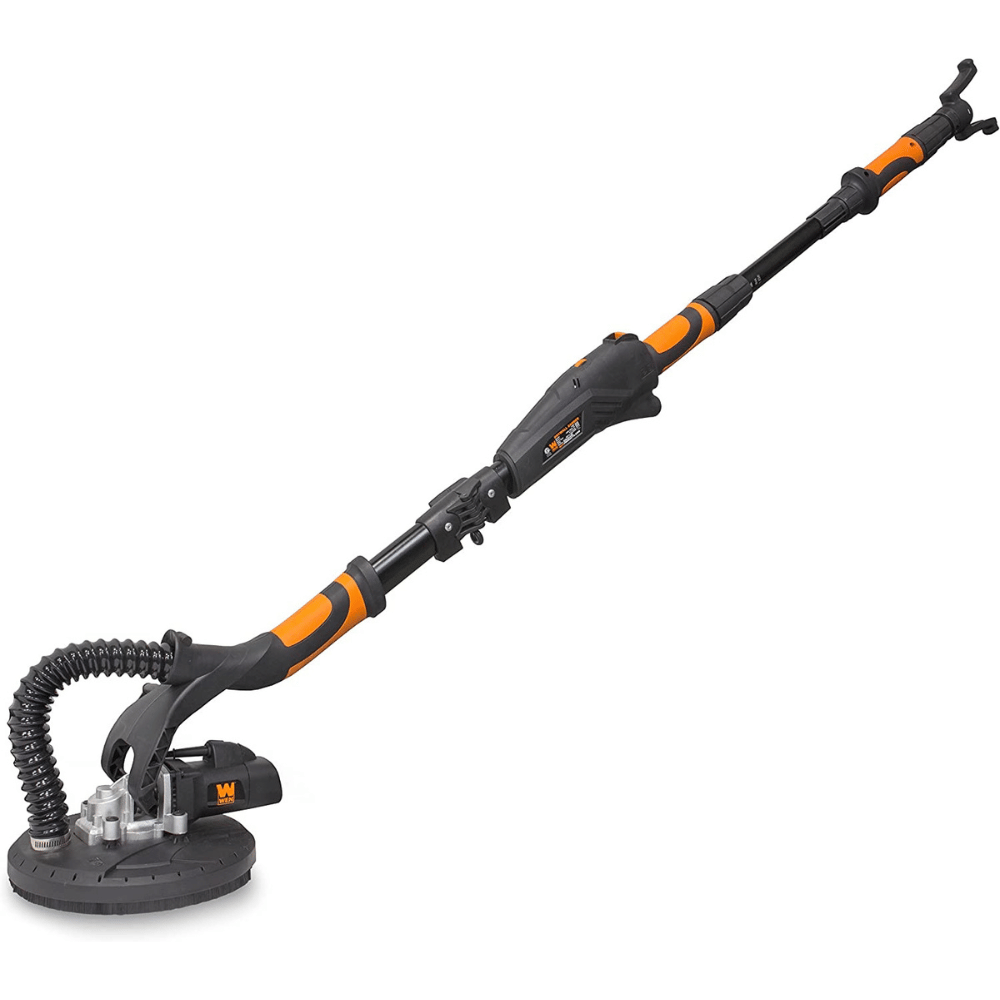
WEN Variable Speed 5 Amp Drywall Sander (6369)
Key Features
- 5 amp corded sander
- Variable speed selection from 600 – 1,500 RPM
- 15 ft dust vacuum hose
Why It’s a Great Choice
Get ready to give your next project a serious upgrade.
The WEN Variable Speed 5 Amp Drywall Sander is here to make any job easier than ever.
This incredible tool features a hook and loop base pad for easily swapping between 6 combination-grit sanding discs.
The 8.5″ head swivels a full 360 degrees, making sure that whoever uses this sander can get into even the tightest of corners with ease.
The dust vacuum hose stretches up to 15 feet, so you can say goodbye to dusty workspaces forever.
And when it’s time to tackle those tougher jobs, you can count on the 5-amp motor and variable speed dial, which provide power and versatility no matter the task at hand.
No more struggling with outdated tools – instead, take your projects to the next level with WEN!
Best Handheld Drywall Sander
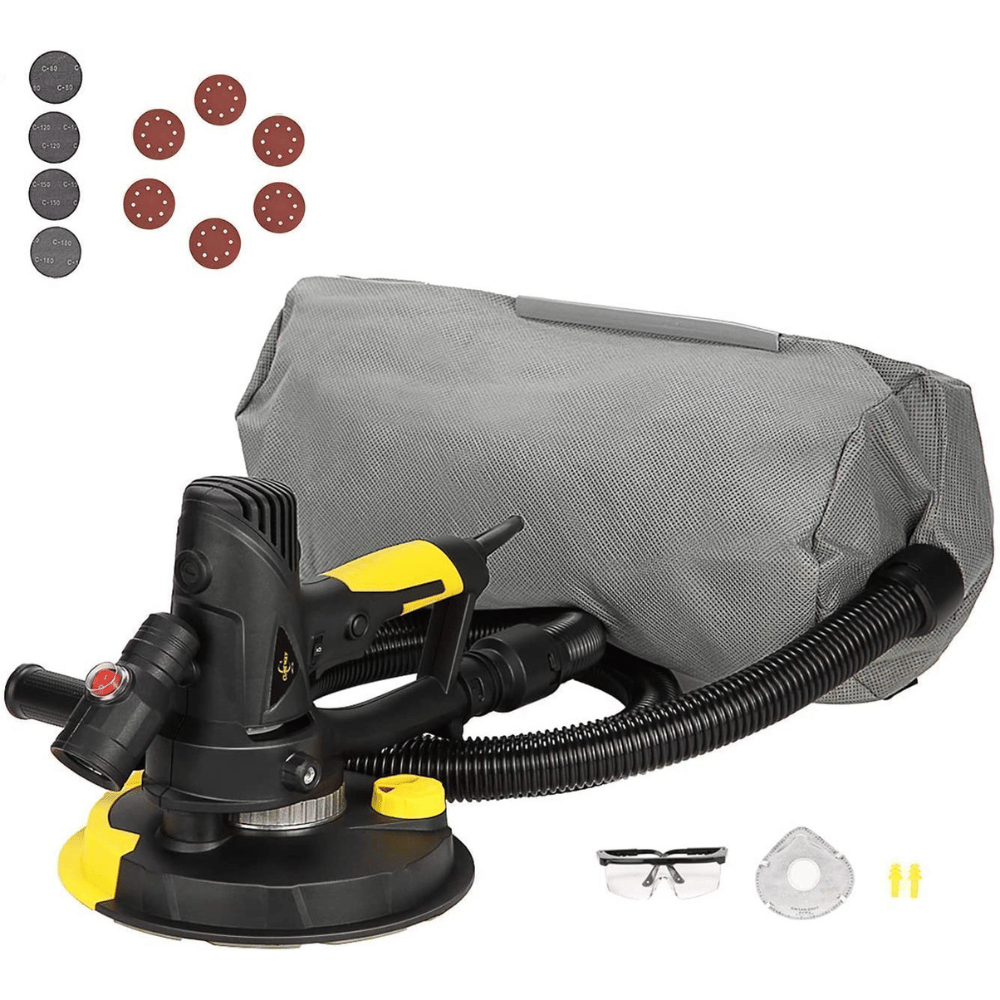
CUBEWAY Electric Drywall Sander with Vacuum
Key Features
- 720-watt corded motor
- 1,200 – 2,500 RPM variable speed selection
- 7-inch sanding sponge diameter
Why It’s a Great Choice
Are you tired of facing the hassle of sanding walls and ceilings?
Have no fear, the CUBEWAY Electric Drywall Sander is here!
This drywall sander comes with a detachable brush segment that makes it easy to sand close to corners and edges.
Plus, the adjustable LED light allows you to check your work as you go!
No more clouds of dust – you can now enjoy an almost dust-free working environment thanks to the built-in vacuum system.
And with the mesh sanding discs providing excellent suction, there’s no need for heavy cleaning after you’re done.
You don’t have to stick to just one speed either.
The CUBEWAY is designed for versatility, with a speed range from 1200 – 2500rpm that offers options for both rapid material removal and fine finishing touches.
Plus, a 26ft long power cord guarantees added maneuverability while being used.
Hence, if you are looking to make your DIY tasks or professional projects much easier, look no further than the CUBEWAY Electric Drywall Sander!
Get ready to revolutionize your sanding game!
Buyer’s Guide to the Best Drywall Sanders
Sanding drywall is no walk in the park.
It’s time-consuming, and messy and sometimes leads to poor results.
You can try to do it yourself, but without the right tools and knowledge, you’ll end up frustrated and with an unsatisfactory outcome.
We’ve compiled some of the most commonly asked questions about drywall sanders to help you make sure you’re making the best decision and starting your project on the right foot.
What is a drywall sander?
A drywall sander is a power tool used to smooth and sand drywall surfaces. It typically consists of a sanding pad or disc attached to a long handle or pole, allowing the user to reach high and hard-to-reach areas. Drywall sanders can be powered by electricity or compressed air, and they come in different types and sizes, depending on the specific task at hand. They are often used in construction or DIY projects to prepare drywall surfaces for painting or finishing.
What are the different types of drywall sanders available in the market?
There are several types of drywall sanders available in the market, including:
- Handheld sanders: These are small sanders that are held in the hand and are suitable for smaller projects or tight spaces.
- Pole sanders: These sanders have a long handle or pole that allows the user to reach high areas without the need for a ladder or scaffolding.
- Dustless sanders: These sanders are equipped with a vacuum system that collects dust as the user sands, reducing the amount of dust in the air and creating a cleaner work environment.
- Belt sanders: These sanders use a belt of sandpaper that rotates in a continuous loop, providing a more aggressive sanding action than other types of sanders.
- Orbital sanders: These sanders use a circular motion to sand, providing a more even finish and reducing the risk of creating swirl marks on the surface.
- Random orbital sanders: These sanders combine the circular motion of an orbital sander with a random pattern, providing an even finish with minimal swirl marks.
- Detail sanders: These sanders are designed for intricate or detailed work and feature a small sanding pad or disc that can reach tight spaces and corners.
The type of drywall sander you choose will depend on your specific needs and the type of project you are working on.
How do I know which type of drywall sander to use for my project?
Choosing the right type of drywall sander for your project depends on a few factors:
- Size of the project: For smaller projects, a handheld sander may be sufficient, while larger projects may require a pole sander or a dustless sander.
- Type of surface: Different types of drywall sanders are suited for different surfaces. Orbital sanders or random orbital sanders are best for flat surfaces, while belt sanders are better suited for rough surfaces.
- Desired finish: If you want a smoother finish, an orbital sander or a random orbital sander may be the best option. If you need to remove a lot of material quickly, a belt sander may be the best choice.
- Personal preference: Some people prefer certain types of sanders based on their personal experience or familiarity with a particular brand or model.
Consider these factors when choosing the right type of drywall sander for your project. If you are unsure, consult with a professional or a hardware store expert for advice.
How does a drywall sander work?
A drywall sander works by using a sanding pad or disc attached to a motor that rotates the sanding surface at high speeds. The user holds the sander and moves it across the drywall surface in a back-and-forth motion. The sanding pad or disc smooths the surface of the drywall by removing any bumps, ridges, or imperfections.
Depending on the type of sander, the user may also have the option to adjust the speed of the motor and/or the level of suction from the vacuum system to better control the sanding process. As the user sands, dust, and debris are collected by the vacuum system, reducing the amount of dust in the air and creating a cleaner work environment.
Drywall sanders are designed to make the sanding process faster, more efficient, and more effective, producing a smooth, even finish on drywall surfaces.
Can a drywall sander be used on other surfaces besides drywall?
Yes, a drywall sander can be used on other surfaces besides drywall, such as wood, metal, or plaster. However, the type of sandpaper used may need to be adjusted based on the surface being sanded. For example, if you are sanding wood, you may need a coarser grit sandpaper than you would use on drywall.
It’s important to keep in mind that different types of sanders are better suited for different surfaces. For example, a belt sander may be better suited for sanding wood than a random orbital sander. Always consult the manufacturer’s instructions and choose the right type of sander and sandpaper for the specific surface you are working on.
Can I attach a vacuum to a drywall sander to reduce dust?
Yes, many drywall sanders come equipped with a vacuum system or have the option to attach a vacuum to reduce dust and debris during sanding. The vacuum system collects the dust as it is created, preventing it from spreading around the work area and minimizing the amount of cleanup required.
If your drywall sander does not come equipped with a vacuum system, you may be able to purchase a separate shop vac attachment that is compatible with your sander. Be sure to check the manufacturer’s instructions and recommendations to ensure that the shop vac attachment you choose is appropriate for your sander and provides adequate dust collection.
Can I use a drywall sander to remove paint from the walls?
Yes, a drywall sander can be used to remove paint from walls. However, it’s important to note that removing paint with a drywall sander can be a challenging and time-consuming process, especially if you are trying to remove multiple layers of paint or paint that has been on the wall for a long time.
Using a drywall sander to remove paint will also generate a significant amount of dust, which can be harmful if inhaled. You should wear appropriate personal protective equipment, such as a dust mask and safety goggles when sanding to protect yourself from the dust.
Before attempting to remove paint with a drywall sander, it’s important to test a small area first to ensure that the sander is not damaging the wall surface or creating excessive dust. If you are unsure about using a drywall sander to remove paint, you may want to consider other methods, such as chemical paint strippers or sanding by hand.
Are there any special techniques for using a drywall sander?
Yes, some techniques can help you use a drywall sander more effectively and efficiently:
- Use light pressure: Let the weight of the sander do the work, and avoid applying too much pressure to the surface being sanded. This can help prevent damage to the drywall and ensure a more even sanding.
- Work in a consistent pattern: Sand in a consistent pattern, such as back-and-forth or circular motions, to ensure even sanding and avoid creating visible lines or patterns on the wall.
- Start with a coarse grit sandpaper: If you are sanding a rough or uneven surface, start with a coarse grit sandpaper and gradually work your way up to a finer grit. This can help you achieve a smoother finish and avoid over-sanding in certain areas.
- Use a vacuum attachment: If your drywall sander has a dust attachment, use it to collect dust and debris as you sand. This can help keep your work area clean and minimize the amount of cleanup required after sanding.
- Wear appropriate protective equipment: Wear a dust mask, safety goggles, and ear protection to protect yourself from dust and noise created by the sander.
Following these techniques can help you use a drywall sander more effectively and achieve a smooth, even finish on your drywall surface.
What are some common problems I might encounter when using a drywall sander?
Here are some common problems that you might encounter when using a drywall sander:
- Dust and debris: Drywall sanding generates a significant amount of dust and debris, which can be difficult to clean up and may pose a health hazard if inhaled. Using a vacuum attachment or setting up a dust collection system can help reduce the amount of dust created.
- Uneven sanding: Uneven sanding can result in visible lines or patterns on the wall surface. To avoid this, work in a consistent pattern and apply even pressure to the sander.
- Over-sanding: Over-sanding can create holes or grooves in the drywall surface. To avoid this, start with a coarse grit sandpaper and gradually work your way up to a finer grit as needed.
- Damaging electrical wires or pipes: If you are sanding near electrical wires or pipes, be careful not to damage them with the sander.
- Sander clogging: The sandpaper or sanding pad on your sander can become clogged with dust or debris, which can reduce its effectiveness. Clean or replace the sandpaper or pad regularly to ensure that it is working properly.
- Noise: Drywall sanding can be noisy, so wear ear protection to protect your hearing.
By being aware of these common problems and taking steps to avoid them, you can ensure a more effective and efficient sanding process.
Is it better to use a corded or cordless drywall sander?
Both corded and cordless drywall sanders have their advantages and disadvantages, and which one is better for you will depend on your specific needs and preferences.
Corded drywall sanders typically offer more power and consistent performance than cordless models, since they are powered by a constant source of electricity. They are generally better suited for large or complex sanding projects that require sustained power and longer run times. However, the cord can limit your mobility and make it more difficult to sand hard-to-reach areas.
Cordless drywall sanders are generally more portable and flexible than corded models since they are not restricted by a power cord. They are often smaller and lighter than corded models, making them easier to maneuver and use in tight spaces. However, they may not have as much power as corded models, and their run time may be limited by the battery life.
Ultimately, the choice between a corded and cordless drywall sander will depend on your specific needs and priorities. If you need sustained power for larger projects and don’t mind the cord, a corded model may be a better choice. If you need more flexibility and mobility for smaller or more complex projects, a cordless model may be a better fit.
Choosing the Best Drywall Sander for You
With all the information we’ve provided you’re on your way to finding the perfect drywall sander for your next project.
What will you tackle first?
Choose from any of the excellent options we suggested and take that wall from drab to fab in no time.
The worst part about shopping for these sanders is deciding which one you want!
So what are you waiting for?
This article just saved you time and money, so click the links and order yours now.
Good luck with your next transformation – hopefully it’s a big success.