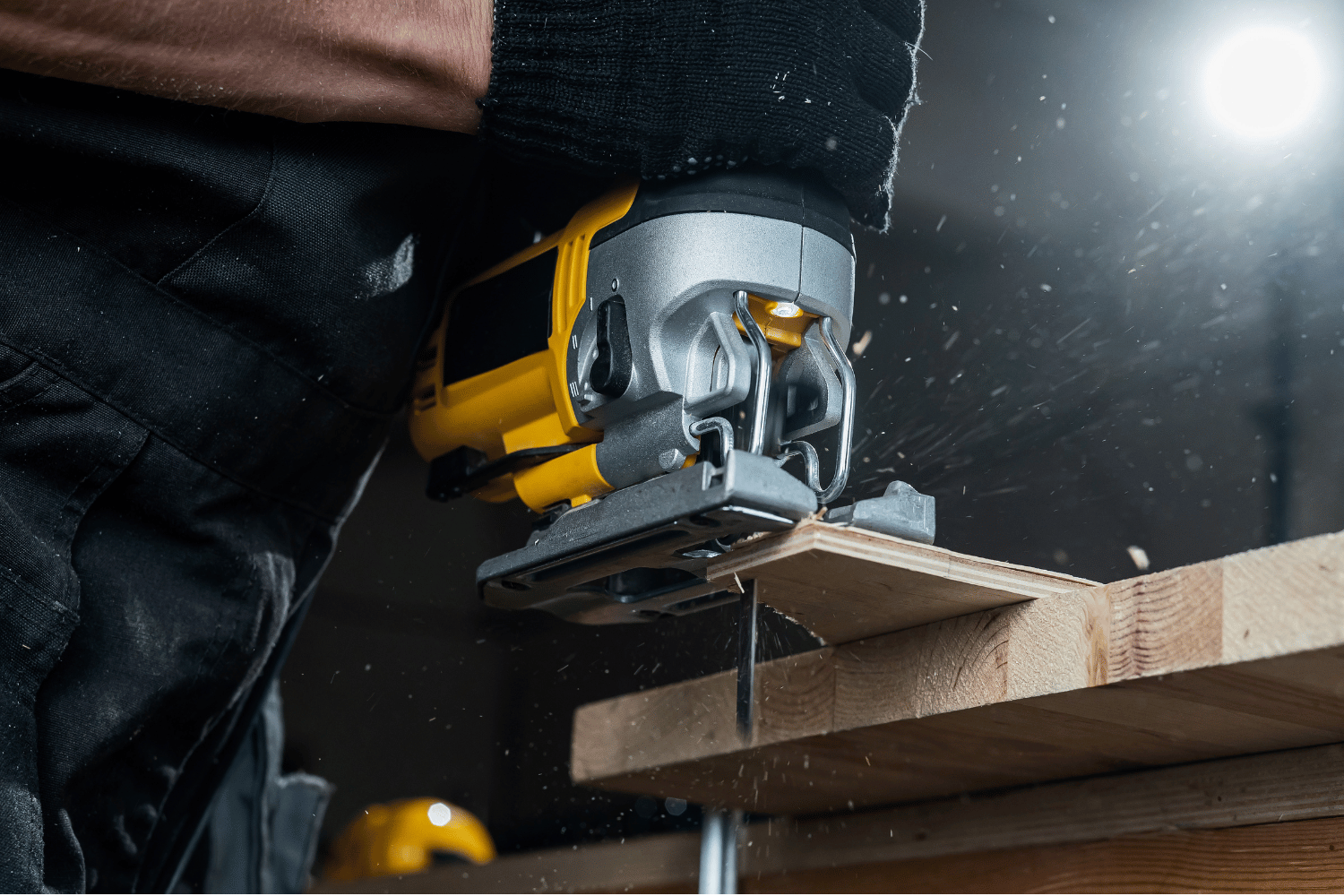
Pick the Best Jigsaw to Cut Through the Competition

If you’re looking to make precision cuts with ease and accuracy, a jigsaw is one of the most important power tools in your workshop.
Whether you’re a DIYer collecting power tools for home improvement projects or a professional contractor making intricate cuts on the job, choosing the best jigsaw can make all the difference.
With so many models available, how do you know which one is best suited to your needs?
We’ll help guide you through the woods (and metals and plastics) and into understanding what makes a great jigsaw – from blade speed settings and stroke lengths to power sources and safety features – so that when it comes time to buy, you’re well-informed and confident in finding the best jigsaw for you.
Are you looking specifically at cordless or corded jigsaws?
Check out our reviews of the best cordless jigsaws and the best corded jigsaws!
How We Choose the Best Jigsaws
With so many jigsaw options on the market, it can be hard to know which one is the best for your needs.
Jigsaws come in all shapes and sizes, with a variety of different features. It can be tough to figure out which one is the right fit for you.
We have read through thousands of reviews on Amazon and weighed options across blade speed settings and stroke lengths to power sources and safety features to find the best jigsaw for a variety of needs.
Whether you’re a professional contractor or a DIY enthusiast, we have you covered.
Overall Winner – Best Cordless Jigsaw
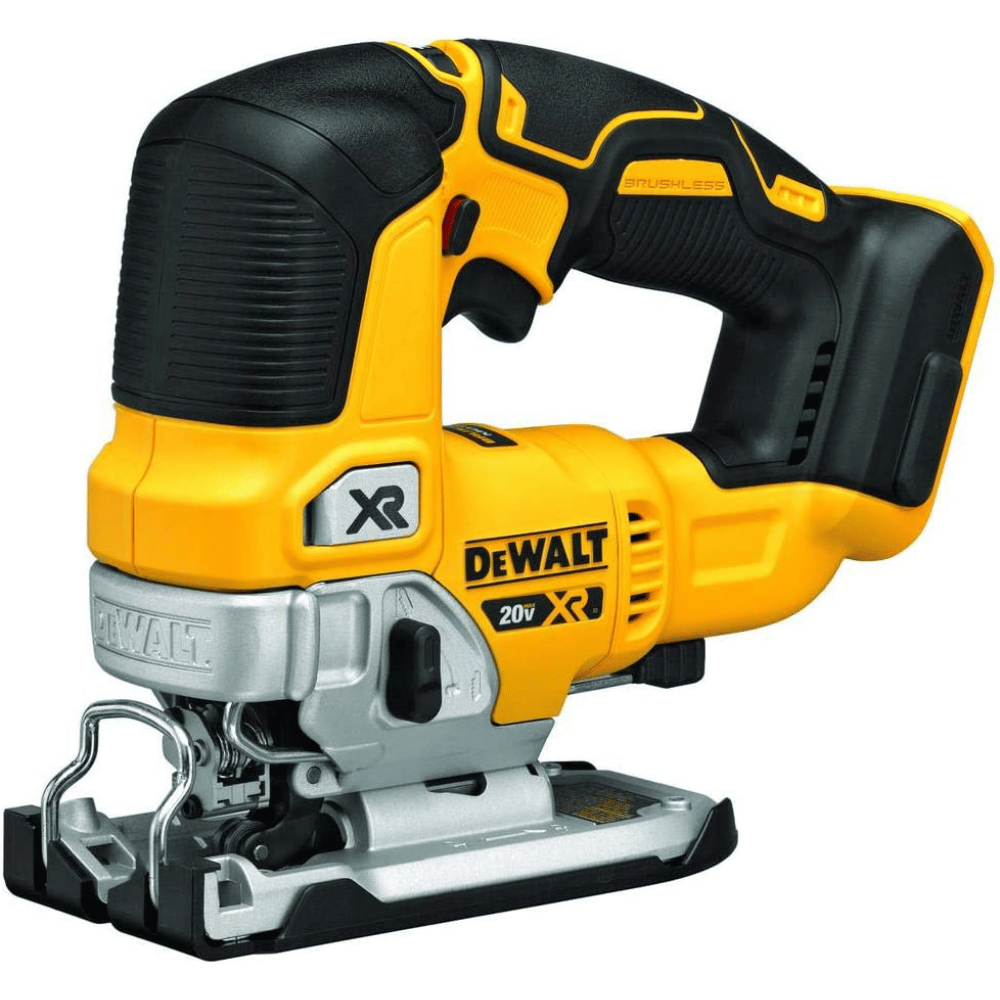
DEWALT 20V MAX XR Cordless Jigsaw (DCS334B)
Key Features
- 20V Cordless, Brushless Motor – up to 3,200 SPM cutting speed
- Integrated LED light and dust blower
- Tool-free blade change
- Accepts T-Shank blades only
- Bare tool
Why It’s a Great Choice
The DEWALT 20V MAX XR battery-powered Jigsaw is a versatile tool for both DIYers and contractors.
With its efficient motor and variable speed trigger, the Dewalt offers powerful performance with extreme battery life.
Outfitted with an all-metal, lever-action keyless blade clamp and keyless shoe bevel, the jigsaw offers easy tool-less blade changes allowing you to install a new saw blade without slowing down.
Adjustable by four positions, orbital action lets you customize cutting to maximize performance on a variety of materials.
A bright LED light illuminates your cut line in dim conditions while a removable shoe cover helps protect your projects from scratches.
An integrated dust blower helps keep your line of sight free from debris so you can make precise cuts every time.
The Dewalt DCS334B is designed to meet any project demands – allowing you to get your job done quickly and efficiently!
Overall Winner – Best Corded Jigsaw
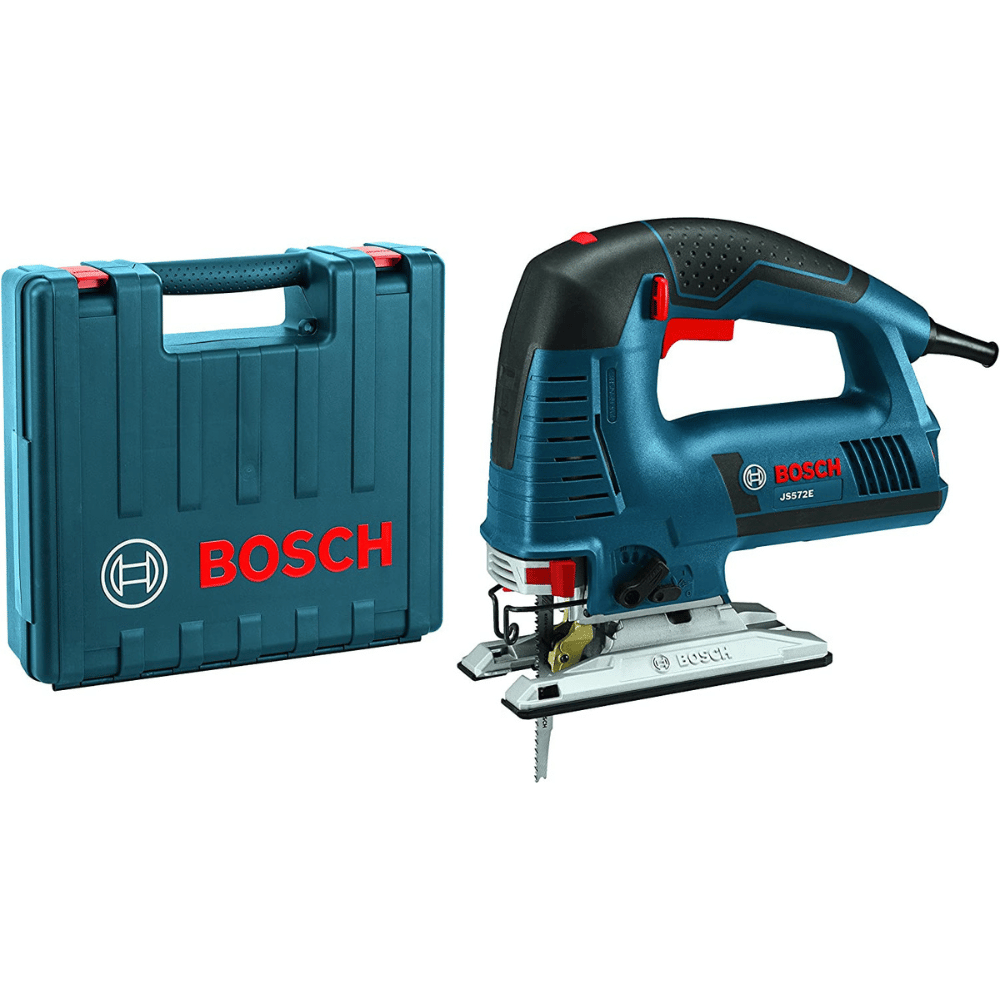
BOSCH 7.2 Amp Corded Jigsaw (JS572EK)
Key Features
- 7.2 amp motor – up to 2,800 SPM cutting speed
- Accepts T-Shank blades only with its tool-less blade change system
- Integrated LED light and dust blower
- 5.5-Inch soft wood cutting capacity
- 0.875-inch aluminum cutting capacity
- 0.375-inch mild steel cutting capacity
Why It’s a Great Choice
This powerful jigsaw from Bosch is the best tool for DIYers and contractors when it comes to professional cutting.
With its innovative Constant Response circuitry, this jigsaw offers consistent speed and performance under load, even with the toughest of materials.
Its state-of-the-art counterbalancing mechanism quells noise and vibration and minimizes blade deflection to ensure accurate cuts every time.
Whether you’re making curved cuts, scallop cuts, or other intricate designs, this jigsaw will get the job done fast and efficiently!
But that’s not all — thanks to its Precision Control II double-roller system, you can be sure you’ll get the exact cut you want.
Get professional results every time with this BOSCH Jigsaw!
Best Budget Jigsaw
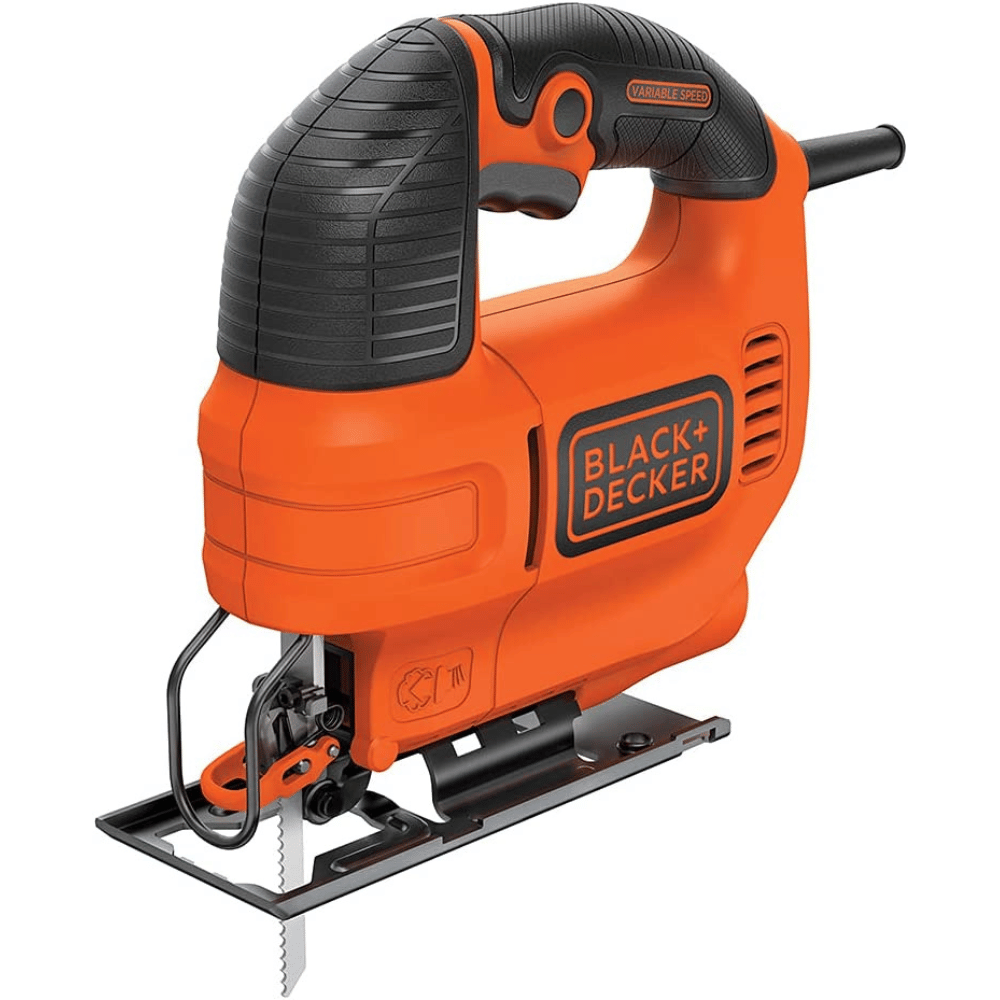
BLACK+DECKER Corded Jig Saw (BDEJS300C)
Key Features
- 4.5 amp motor – up to 3,000 SPM cutting speed
- Tool-free blade change
- Accepts U-shank and T-shank blades
- 3/4-Inch stroke length
Why It’s a Great Choice
The BLACK+DECKER Corded Jigsaw is your perfect tool for DIYers and contractors alike, empowering you to make premium cuts without breaking the bank.
With a 4.5 Amp motor that delivers variable speeds of up to 3,000 SPM, you can rest assured that even the most challenging tasks will be handled with ease and accuracy.
The tilting base plate allows for creative freedom in beveled cuts and the quick-clamp system makes tool-free blade changes quick and easy.
Finally, a built-in dust blower eliminates sawdust from your cut line so you can focus on getting the job done right.
Get crafty and make precision cuts with this BLACK+DECKER Jigsaw – no wallet draining necessary!
Best Jigsaw Value
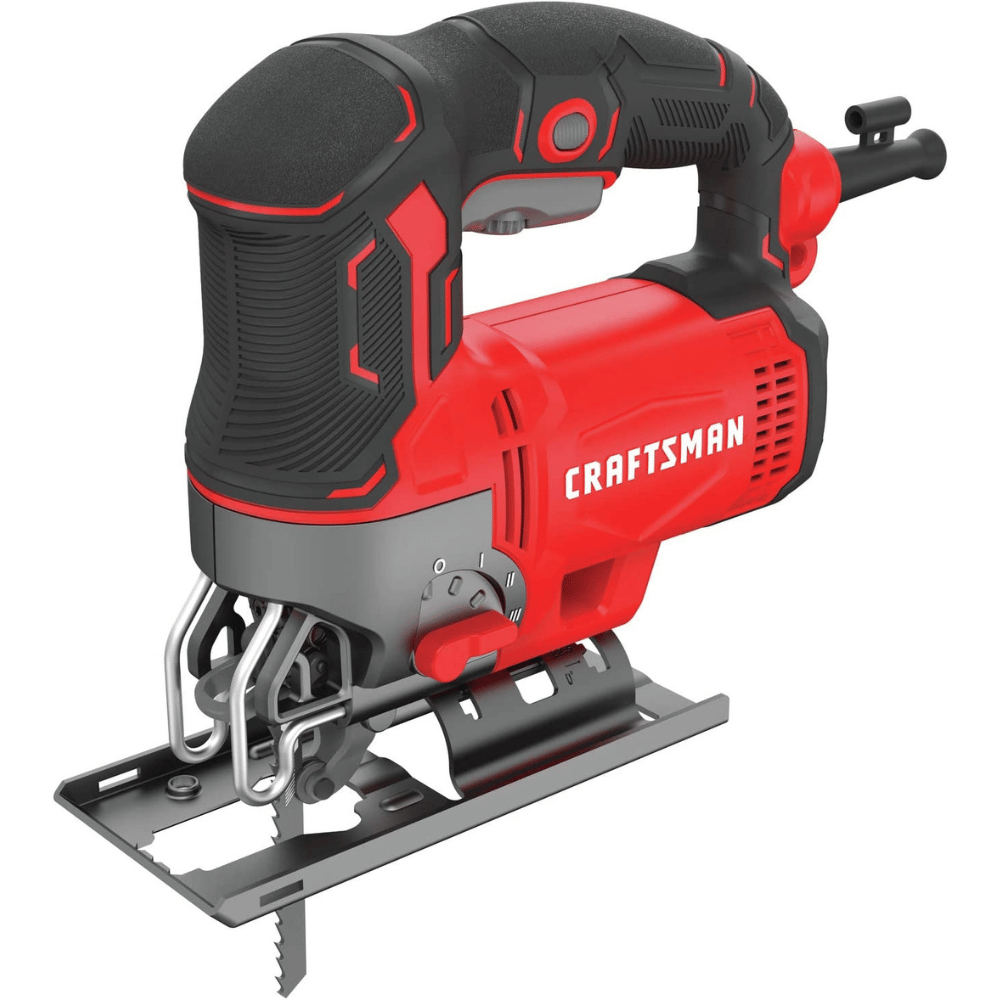
Craftsman 6.0 Amp Corded Jig Saw (CMES612)
Key Features
- 6.0 amp motor – up to 3,200 SPM cutting speed
- Four orbital action settings to regulate cut aggressiveness
- Variable speed trigger with a built-in dial
Why It’s a Great Choice
For your DIY projects and easy home renovations, nothing cuts the job faster than Craftsman’s 6.0 Amp Corded Jigsaw!
With its variable speed dial integrated into the trigger controlling your clean and accurate cuts with a range of 0-3,200 SPM, this jigsaw will easily glide through different woods and metals so you can cut with confidence.
This jigsaw offers four powerful orbital settings to adjust the aggressiveness of the cut depending on the material or application you are working on.
For added convenience, it also features a beveling shoe to make beveled cuts up 45° angle and a contoured overmolded handle that fits perfectly in your hand making use much more comfortable for long periods.
When you’re ready for more demanding jobs, switch to Craftsman’s 6.0 Amp Corded Jig Saw – an authoritative choice to help complete any project quickly and skillfully!
Best Barrel Grip Corded Jig Saw
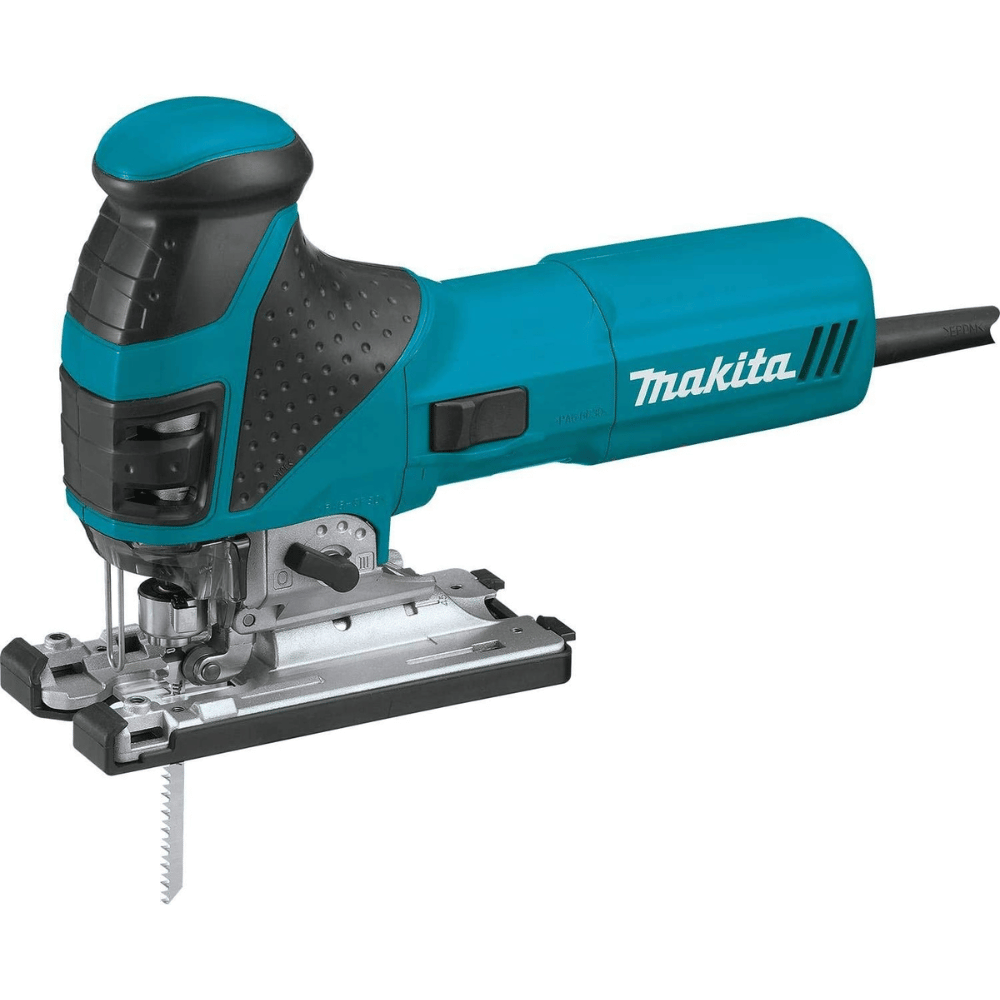
Makita Barrel Grip Jig Saw (4351FCT)
Key Features
- 6.3 amp motor – up to 2,800 SPM cutting speed
- Built-in LED light
- 40% less vibration and lowest noise level in class
- 1-inch stroke length
Why It’s a Great Choice
If you’re a DIYer or contractor looking for precision cutting with maximum control, then the Makita Barrel Grip Jigsaw is the perfect tool for your job.
Boasting a powerful motor and an ergonomically designed barrel grip to deliver a closer connection to your work surface, this jigsaw will meet all of your expectations.
With its wealth of features, it stands apart from its competition and above the rest.
Featuring an anti-splintering device and L.E.D. light to illuminate your cuts, every project will be safe and precise with this barrel grip jigsaw.
Its dust blower makes sure that debris remains clear during your project, so you have optimal visibility throughout any task.
By combining power with convenience and comfort, Makita has developed some of the best jigsaws available on the market today.
The tool-less blade changes offer quick installation and blade ejection that even the most demanding projects won’t be able to overpower!
Cut through wood with ease up to 5-5/16 inches at 90° – with metal capacity at 3/8 inches at 90° – creating perfect results for all your projects!
And thanks to our electronic variable speed control (800 – 2,800 SPM), you can cut more accurately than ever before.
Plus, dynamic balance technology ensures less vibration which in turn reduces noise levels compared to other models on the market today!
Packaged in a lightweight body of just 5.5 pounds, there’s no limit to what you can achieve with Makita’s Barrel Grip Jigsaw!
Stop settling for second-best and elevate your project-completing experience by adding this amazing tool to your collection today!
Buyer’s Guide for the Best Jigsaws
When shopping for a jigsaw, there are many things to consider.
Jigsaws come in all shapes and sizes, with different features and capabilities.
It can be hard to know which one is right for you.
We have compiled some of the most frequently asked questions when shopping for a jigsaw.
This will help you decide which features are important to you and make it easier to find the best jigsaw for your needs.
What is a jigsaw?
A jigsaw is a versatile power tool used for cutting curves and intricate shapes in a variety of materials such as wood, metal, and plastic. It consists of a reciprocating blade that moves up and down rapidly to make quick, precise cuts.
Jigsaws come in both corded and cordless varieties. Corded models are typically more powerful and reliable since they don’t rely on batteries but can be limited by the length of their power cords. Cordless models offer greater portability but may lack the same level of power as corded versions.
The blades used in jigsaws vary depending on the material being cut. Blades with fewer teeth per inch (TPI) are ideal for rough cuts in wood, while those with higher TPI counts produce cleaner cuts in metal or plastic. Some blades also have variable pitch teeth that can handle different types of materials without overheating or breaking.
Jigsaws are commonly used by DIY enthusiasts, woodworkers, metal fabricators, and construction professionals to create intricate designs and shapes that would be difficult or impossible to achieve with other saws. They’re also useful for making plunge cuts (cutting into the middle of a workpiece) and cutting curves.
In summary, a jigsaw is an essential tool for anyone who needs to make intricate cuts in various materials. With its versatility and precision cutting capabilities, it’s no wonder why the jigsaw remains a popular choice among DIYers and professionals alike.
What are the benefits of using a jigsaw for cutting?
A jigsaw is a versatile and highly useful tool for woodworking, metalworking, and other cutting tasks. Here are some of the benefits of using a jigsaw for cutting:
- Precision: Jigsaws allow you to make precise cuts with ease, whether you’re cutting curves or straight lines. The blade can be easily maneuvered to create intricate shapes and designs.
- Versatility: With the right blade, a jigsaw can cut through a variety of materials including wood, metal, plastic, and more. This makes it a great tool for DIY projects as well as professional applications.
- Efficiency: A jigsaw can save you time and effort when compared to manual sawing methods. It’s also much easier to use than larger power saws like circular saws or table saws.
- Portability: Many jigsaws are cordless and lightweight, making them easy to transport to job sites or move around your workshop.
- Safety: Most modern jigsaws come equipped with safety features like blade guards and anti-vibration technology that help reduce the risk of injury during use.
Overall, if you’re looking for a reliable cutting tool that offers precision, versatility, efficiency, portability, and safety features – then a jigsaw is an excellent choice!
What types of materials can be cut with a jigsaw?
Jigsaws are incredibly versatile cutting tools that can be used to cut a wide range of materials. Here are some of the most common types of materials that can be cut with a jigsaw:
- Wood: Jigsaws are ideal for cutting wood of all types, including hardwoods, softwoods, and plywood. They’re perfect for making curved or intricate designs in woodworking projects.
- Metal: With the right blade, a jigsaw can also be used when cutting metal of various types, including aluminum, sheet metal, and thin steel. However, it’s important to note that thicker metals may require a more powerful saw.
- Plastic: Jigsaws are great for cutting plastic materials like PVC pipes and acrylic sheets. They provide clean cuts without causing any melting or warping.
- Ceramic tiles: A jigsaw equipped with a diamond-grit blade is an excellent tool for cutting ceramic tiles during tiling projects.
- Fiberglass: Jigsaws with specialized blades can also be used to cut through fiberglass materials commonly found in boats and other applications.
- Leather and fabric: A fine-toothed jigsaw blade can easily slice through leather or fabric material while keeping the edges smooth and clean.
Overall, jigsaws are incredibly versatile tools that can cut through a wide variety of materials with ease. Just make sure you choose the right blade for the task at hand!
Can a jigsaw be used to make both a straight cut and a curved cut?
Yes, a jigsaw is a versatile cutting tool that can be used for cutting straight or curved (like a jigsaw puzzle, get it?). Unlike a circular saw, one of the main advantages of using a jigsaw is its ability to make intricate curves and shapes that would be difficult or impossible to achieve with other types of saws.
When it comes to cutting straight lines, jigsaws are also capable of producing clean and precise results. However, it’s important to note that the quality of the cut may depend on factors such as blade type, blade sharpness, and the material being cut.
To make straight cuts with a jigsaw, you’ll need to use a guide or fence to ensure that your cuts are perfectly straight. You can also use clamps to secure your workpiece in place while cutting.
For curves, simply adjust the speed of your jigsaw and move the blade along the desired line or shape. The trick is to keep a steady hand while moving the saw at an even pace to achieve smooth and accurate curves.
Overall, whether you’re cutting straight or curved – a jigsaw is an excellent tool for both applications thanks to its versatility and precision capabilities.
What features should I look for in a high-quality jigsaw?
Here are some of the most important jigsaw features:
- Power and Speed: A powerful motor with a variable speed dial will allow you to cut through different types of materials effectively. Look for a jigsaw that has at least 5-6 amps of power and can produce speeds between 500-3000 strokes per minute.
- Blade Change Mechanism: Choose a model that allows for an easy and quick tool less blade change without requiring any tools or complicated procedures.
- Orbital Action: An orbital action feature allows the blade to move back and forth as well as up and down, making it easier to cut through thicker materials quickly.
- Adjustable Base Plate: An adjustable base plate is crucial for making angled cuts at different angles ranging from 0-45 degrees.
- Dust Blower: A dust blower or extraction system helps keep your cutting line clear by blowing sawdust away from the blade while cutting.
- Comfortable Grip Handle: Make sure the jigsaw has an ergonomic handle design that provides a comfortable grip during extended use.
- LED Lights: Some high-end models come with built-in LED lights that illuminate your cutting area, allowing you to see your workpiece clearly even in low light conditions.
- Trigger Lock: A trigger lock acts to keep the trigger in the on position for less fatigue when working on long cuts.
Overall, investing in a high-quality jigsaw with these features will make your cutting tasks more efficient, accurate, and enjoyable.
What do orbital controls do on jigsaws?
Orbital controls on jigsaws are designed to improve the efficiency and accuracy of your cutting tasks. An orbital jigsaw contains a switch not found on a straight reciprocating jigsaw that causes the blade to move not only up and down but also forward and backward in an elliptical motion.
The primary advantage of this motion is that it reduces the amount of resistance encountered by the blade while cutting, making it easier to cut through thicker or harder materials. The back-and-forth movement also helps clear sawdust from the cutting line, improving visibility and reducing friction.
By adjusting the degree of orbital action, you can achieve different levels of aggressiveness in your cuts. A higher level of orbital action will result in faster, rougher cuts that are ideal for softer materials like wood. On the other hand, a lower level of orbital action will produce slower but smoother cuts that are better suited for harder materials like metal.
It’s important to note that too much orbital action can cause excessive vibration, which can lead to inaccurate cuts or even damage the workpiece. Therefore, it’s recommended that you adjust the degree of orbital action based on the material being cut and your desired cutting speed.
Overall, orbital controls on jigsaws provide greater versatility and precision than straight reciprocating jigsaws when cutting various types of materials. Whether you’re a professional woodworker or a DIY enthusiast, having this feature on your jigsaw can make your cutting tasks more efficient and enjoyable.
Are corded and cordless models similar to other power tools? Is a corded or cordless jig saw better for my needs?
As with most power tools, when it comes to choosing between a corded or cordless jigsaw, there are several factors to consider that will depend on your specific needs and preferences.
Corded Jigsaws:
Corded jigsaws are typically more powerful than their cordless counterparts and can handle tougher cutting tasks. They also offer unlimited runtime since they do not rely on batteries. Corded models are ideal for heavy-duty cutting tasks that require a lot of power and precision.
On the downside, the cord can limit your mobility when working in tight spaces or areas far from a power outlet. Additionally, corded jigsaws tend to be heavier and bulkier than cordless ones, which can lead to fatigue during extended use.
Cordless Jigsaws:
Cordless jigsaws are more portable and versatile than their corded counterparts. They allow you to work in any location without being tethered to an electrical outlet. Cordless saws are ideal for lighter cutting tasks that require flexibility and maneuverability.
On the downside, battery life is limited, so you’ll need to recharge or replace batteries frequently if you’re using the saw for extended periods. Cordless models may also lack the power needed for tougher materials like metal or thick hardwoods.
Overall, whether a corded or cordless jigsaw is better for your needs depends on the types of projects you plan on tackling. If you need maximum power and precision for heavy-duty cuts, then a corded model is likely the best choice. Conversely, if you value portability and flexibility over raw power, then a cordless model may be more suitable for your needs.
Are jigsaw blades universal?
Jig saw blades are not universal, and it is essential to select the right blade for your cutting application. The type of jigsaw blade you need will depend on the material you’re cutting, the thickness of the material, and the type of cut you want to make.
Jig saw blades come in various shapes and sizes to accommodate different materials and cuts. For instance, blades with fewer teeth per inch (TPI) are ideal for rough cuts in wood, while those with higher TPI counts produce cleaner cuts in metal or plastic. Additionally, some blades have variable pitch teeth that can handle different types of materials without overheating or breaking.
It’s also important to note that jig saw blades come with different shank types such as T-shank or U-shank. It’s crucial to ensure that you choose a blade with a compatible shank type for your jigsaw model.
While most jigsaws have standard blade clamps that can accept both T-shank and U-shaped blades, some models may be limited to one type only. Therefore, it’s essential to check your jigsaw manual before purchasing a new blade.
In summary, jigsaw blades are not universal. It’s vital to select the appropriate blade for your cutting application based on factors like material type, thickness, and desired cut. Ensure that you choose a compatible shank type for your jigsaw model as well. By selecting the right blade for your needs, you’ll achieve optimal results from your cutting tasks while ensuring safety and efficiency.
What is the difference between a T-shank blade and a U-shank blade?
The main difference between a T-shank blade and a U-shank blade is the shape of the shank, which is the part of the blade that attaches to the jigsaw.
T-shank blades have a straight shank with a flat bottom that fits into a T-shaped slot on the jigsaw. This type of blade is more common in modern jigsaws, as it provides better grip and stability for the blade. Additionally, T-shank blades are easier and quicker to change than U-shank blades because they simply snap into place.
On the other hand, U-shank blades have a curved shank that resembles the letter “U”. These blades were commonly used in older models of jigsaws but are now less common due to their limitations. U-shank blades require a set screw to secure them into place, which can be time-consuming and difficult to adjust. They also tend to be less stable during use, which can result in less precise cuts.
In summary, T-shank blades are generally considered superior to U-shank blades due to their improved stability and ease of use. However, if you have an older model jigsaw that only accepts U-shank blades, there are still many high-quality options available on the market that can help you achieve accurate cuts. Ultimately, your choice of blade will depend on your specific needs and preferences, as well as compatibility with your jigsaw model.
Are there any accessories or attachments that can enhance the functionality of my jigsaw?
Yes, several accessories and attachments can enhance the functionality of your jigsaw. These accessories and attachments can help you achieve more precise cuts, improve safety, and increase versatility.
Here are some of the most popular jigsaw accessories and attachments:
- Jigsaw Blades: The type of blade you use will determine the quality of your cut. There are many different types of blades available for jigsaws, including those designed for wood, metal, plastic, and other materials. You can also find specialty blades for cutting curves or making plunge cuts.
- Guide Rails: Guide rails can help you make straight cuts with your jigsaw. They attach to the base plate of your saw and provide a guide for the blade to follow.
- Dust Collection System: A dust collection system is an attachment that helps to collect sawdust as you work. This not only keeps your workspace cleaner but also improves visibility while cutting.
- Laser Guides: Laser guides project a beam onto your workpiece to show exactly where the blade will cut. This makes it easier to make precise cuts without having to mark up your material first.
- LED Lights: LED lights illuminate your workpiece, making it easier to see what you’re doing in low-light conditions.
- Circle-Cutting Attachments: Circle-cutting attachments allow you to make perfect circles with your jigsaw by attaching a pivot point to the base plate.
- Edge Guides: Edge guides attach to the base plate of your jigsaw and help you make cut straight along an edge or line.
In conclusion, there are numerous accessories and attachments available that can enhance the functionality of your jigsaw. From specialized blades for different materials to laser guides that improve accuracy, these tools can help you achieve better results while working more efficiently and safely. Consider investing in these accessories if you want to take full advantage of all that a jigsaw has to offer!
Choosing the Best Jigsaw for You
Finding the perfect jigsaw for your toolbox doesn’t have to be an arduous task.
If you’re hunting for the best jigsaw to add to your arsenal, then look no further – these are the five right tools for the job.
We hope this roundup of products has been helpful, allowing you to make an informed decision depending on which one suits your needs the most.
Now that you know the best options available, click the links we’ve provided to Check Prices on Amazon and order yours now!