Best Palm Sander for a Smooth Operation

Are you looking to create the perfect finish for your wood projects?
If so, then you need a palm sander.
A palm sander is one of the essential power tools for any DIYer or woodworker, capable of delivering beautifully smooth surface finishes quickly and effortlessly.
Whether you’re sanding away splinters or creating fine details, the best palm sander can make all the difference in achieving optimal results with ease.
To help you find the right one for your needs, we have compiled an in-depth guide exploring what makes a quality palm sander and showcasing some of our favorite tools on the market today.
Let’s get started!
How We Choose the Best Palm Sanders
With all of the different palm sanders on the market, it can be hard to know which one is right for you.
It’s not just about finding a palm sander that fits your needs, it’s also important to find one that will last.
A lot of people buy a cheap palm sander and end up having to replace it soon after because it doesn’t have the power or durability to get the job done.
We’ve done the research for you and we’re confident that these are the best palm sanders on the market.
They all have great features and they’ve all garnered rave reviews from customers who love them.
Whether you’re looking for 1/4-sheet or random orbit sanders, there’s something here for you.
Best Cordless Palm Sander with Battery
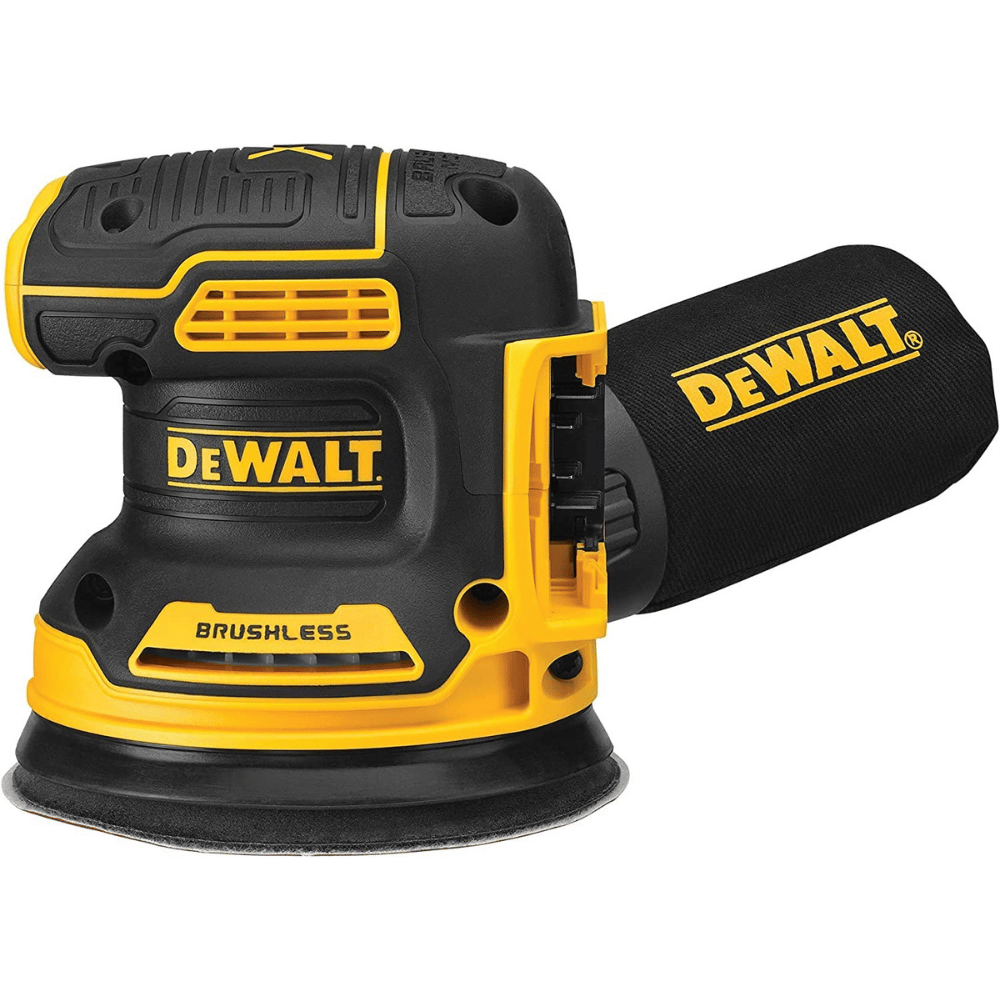
DEWALT 20V MAX Orbital Sander (DCW210B)
Key Features
- 20V cordless, 3 Amp motor
- Variable speed control – 8,000-12,000 RPM
- 8-hole hook-and-loop pad
Why It’s a Great Choice
The DEWALT 20V MAX Orbital Sander is the perfect tool for DIYers and woodworkers looking to get professional results with minimal effort.
Its brushless motor offers excellent runtime and efficient performance that will help get the job done quickly.
Thanks to its variable-speed control, you can adjust this sander from 8,000 to 12,000 OPM to find the perfect speed for your application.
Its low-profile design allows you to seamlessly work close to your work surface for extra precise sanding.
Plus, its one-handed locking dust bag will contain any excess debris.
For quick and easy changing of your sanding discs, this orbital sander comes with a replaceable 8-hole hook-and-loop pad.
This sander has been designed with usability in mind; its texturized rubber overmold grip provides comfortable sanding while its dust-sealed switch protects against dust ingestion for longer switch life.
Innovative features like the DEWALT 20V MAX Orbital Sander are why it has become an essential tool in any DIYer or woodworker’s kit.
Reach your creative potential now and start seeing impressive results!
Best Corded Random Orbit Sander
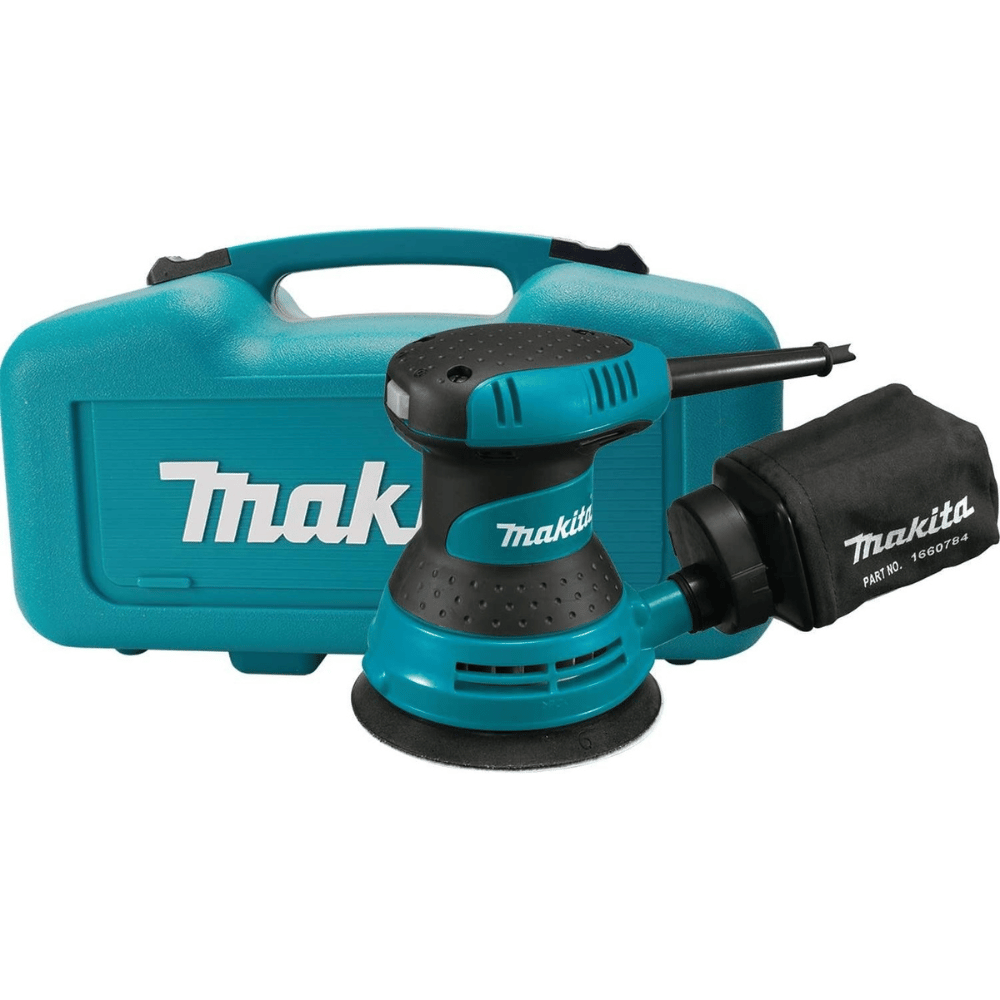
Makita 5″ Random Orbit Sander (BO5030K)
Key Features
- Corded model, 3 Amp motor
- 1/8″ Random orbit action at 12,000 RPM
- 2.9 lbs
Why It’s a Great Choice
When it comes to tackling any woodworking project or delicate sanding task, the Makita 5″ Random Orbit Sander is a professional craftsman’s first choice.
With a powerful 3 AMP motor and 12,000 OPM for fast and smooth sanding, you’ll be ready to tackle any project in no time.
The unique pad control system provides controlled pad speed upon start-up, perfect for even the most delicate of finishes.
And thanks to its all-ball bearing construction this sander is precision engineered for longer tool life, so you can use it with peace of mind knowing it won’t let you down.
Not only that, but this sander also features an efficient through-the-pad dust collection system and an extra wide mouth on its fabric dust bag for easy disposal.
The Makita Random Orbit Sander is a must-have for DIYers and serious woodworkers alike!
Best Low-Vibration Palm Sander
Bosch 18V Brushless 5 In. Random Orbital Sander (GEX18V-5N)

Key Features
- 18V Cordless
- Vibration dampening element
- 5-inch 8-hole pad
Why It’s a Great Choice
Get the job done right, with Bosch’s 18V Brushless 5 In. Random Orbit Sander.
This sander features a well-balanced ergonomic design and a comfortable palm grip that are designed to reduce user fatigue and give you optimal results in even the toughest materials.
Plus, its powerful brushless motor allows for enhanced stock removal similar to corded models.
The speed selector is also great for adapting to different types of applications.
You’ll be able to sand flat and difficult concave/convex surfaces quickly thanks to its 5 In. 8-hole pad, which has been specially crafted for efficient dust collection when hooked up to a vacuum or dust bag.
Keeping the dust particles at bay has never been easier than with this cordless sander.
Make sure you have the tools you need for any DIY or woodworking project with this easy-to-use sander from Bosch.
Best Corded 1/4 Sheet Palm Sander
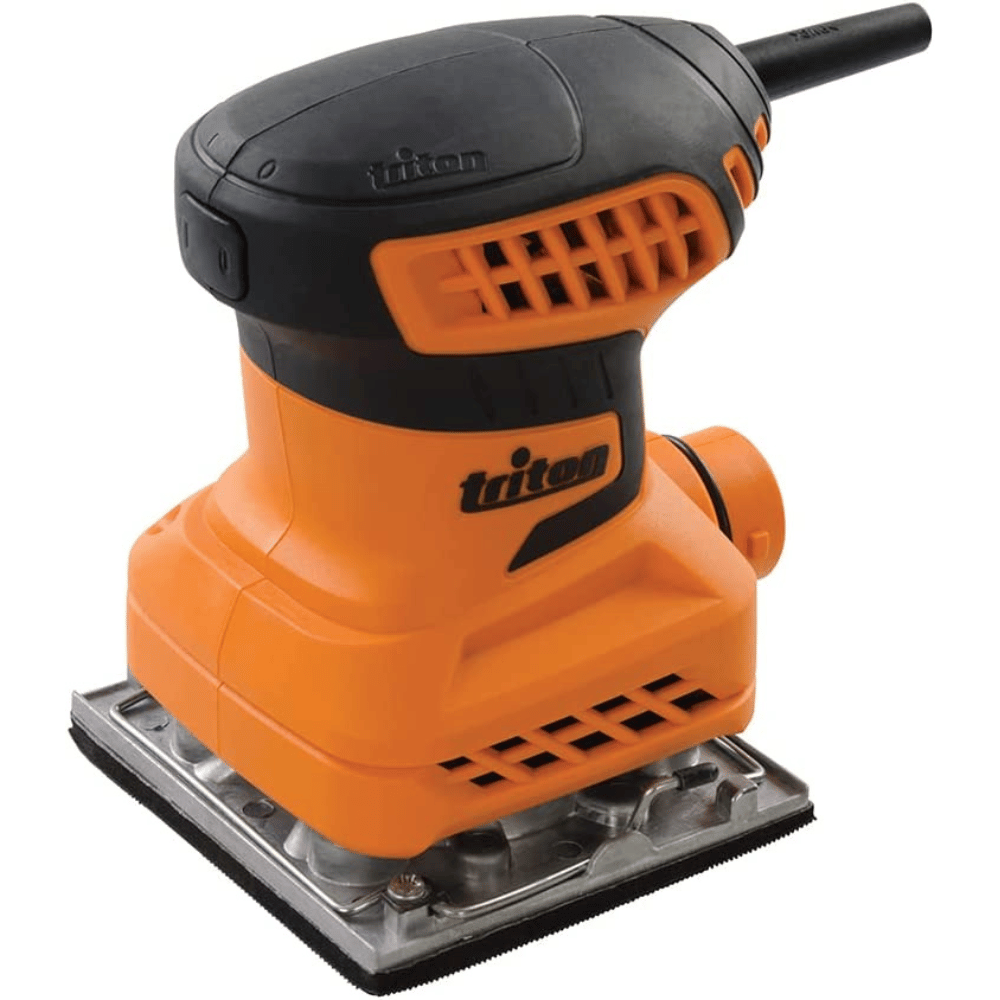
Triton 1.6 Amp Orbital Palm Sander 1/4″ Sheet (TQTRSS)
Key Features
- 1.6 amp corded motor
- 12,000 RPM single speed
- Hook-and-loop 1/4 sheet pad
Why It’s a Great Choice
The Triton TQTRSS 1.6A Orbital Palm Sander ¼” Sheet is the perfect solution for the DIYer and woodworker looking to improve their sanding experience!
With a powerful 1.6 Amp motor and random orbital action, this electric palm sander is capable of tackling even the most challenging sanding projects in your workshop or home.
Experience exceptional comfort thanks to vibration-reducing rubber over-molded grip while you enjoy fast, efficient sandpaper sheet changes with our hook-and-loop backing pad and clamp attachment: this tool is sure to make light work for your future projects!
Plus, it comes with a soft carry case for portability and easy storage.
With Triton, working smarter has never looked so good!
Buyer’s Guide to the Best Palm Sanders
People are often overwhelmed when shopping for a palm sander because there are so many different models and features to choose from.
Scrolling randomly through pages upon pages of choices just makes it that much harder.
We’ve created this FAQ guide to help make your decision easier.
We’ll answer the most commonly asked questions about palm sanders and help you find the perfect model for your needs.
What is a palm sander?
A palm sander is a handheld power tool that is used to smooth surfaces such as wood, metal, and plastic by sanding with a small sanding pad. It is typically small and lightweight, and the sanding pad is usually circular. Palm sanders are powered by electricity and come in both corded and cordless versions. They are designed to be used with various grits of sandpaper to achieve the desired finish. The name “palm sander” comes from the fact that the tool is designed to fit comfortably in the palm of the user’s hand.
How does a palm sander work?
A palm sander works by using a small electric motor to rotate a circular sanding pad at high speeds. The sanding pad is attached to the base of the tool, which is designed to fit comfortably in the palm of the user’s hand. When the tool is turned on, the sanding pad rotates rapidly, allowing the user to move it back and forth over the surface to be sanded. As the sanding pad makes contact with the surface, it removes the top layer of material, smoothing out any imperfections and creating a smooth, even surface. The user can control the speed and pressure of the sanding by adjusting the settings on the tool, allowing for precise and accurate sanding. The sandpaper used with a palm sander can be changed easily, allowing the user to switch between different grits to achieve the desired finish.
What are the different types of palm sanders available?
There are several types of palm sanders available, each designed for specific purposes. The most common types of palm sanders include:
- Random Orbital Sanders: This type of sander is the most versatile and widely used. It uses a circular sanding pad that moves in an orbital pattern to prevent swirl marks and to produce a fine finish.
- Sheet Sanders: This type of sander uses a rectangular sandpaper sheet that is clamped onto the sanding pad. It is ideal for sanding large, flat surfaces.
- Detail Sanders: This type of sander has a triangular sanding pad and is used for sanding tight corners and hard-to-reach areas.
- Belt Sander: This type of sander uses a continuous loop of sandpaper that is driven by a motor. It is ideal for removing large amounts of material quickly and for sanding large, flat surfaces.
- Palm-Grip Sanders: This type of sander is designed to fit comfortably in the palm of the user’s hand and is used for light sanding and finishing work.
- Finger Sanders: This type of sander has a narrow sanding pad that is ideal for sanding in tight spaces and corners.
- Drywall Sanders: This type of sander is designed for sanding drywall and plaster surfaces, and features a long handle for extended reach.
Each type of palm sander has its unique advantages and is suitable for different types of sanding projects.
What are the advantages of using a palm sander?
There are several advantages to using a palm sander:
- Speed: Palm sanders can sand surfaces quickly and efficiently, making them ideal for large projects.
- Precision: Palm sanders allow for precise and accurate sanding, making them perfect for delicate or intricate work.
- Comfort: Palm sanders are designed to be comfortable to use, with ergonomic handles that reduce hand fatigue and vibrations.
- Versatility: Palm sanders come in a variety of sizes and types, allowing for use on a wide range of surfaces and materials.
- Consistency: Palm sanders produce a consistent finish, with no variation in sanding pressure or direction.
- Control: Palm sanders allow the user to control the speed and pressure of the sanding, ensuring that the finish is exactly as desired.
- Efficiency: Palm sanders are designed to be efficient and can often save time and effort compared to sanding by hand.
Overall, palm sanders are a valuable tool for anyone who wants to achieve a smooth, professional finish on their woodworking or DIY projects.
Is a corded or cordless palm sander better?
Both corded and cordless palm sanders have their advantages and disadvantages, so the choice between them depends on your needs and preferences.
Corded palm sanders are typically more powerful than cordless models, and they can operate continuously without needing to be recharged. They are also usually less expensive than cordless models, and they don’t require the purchase of additional batteries or chargers. However, the cord can limit your mobility, and you may need an extension cord to reach all areas of your project.
Cordless palm sanders offer greater mobility and flexibility, as they don’t have a cord to restrict your movement. They are also more convenient to use in areas without a power outlet, and they eliminate the need for an extension cord. However, they are typically less powerful than corded models, and they may require frequent recharging, which can be inconvenient.
Ultimately, the choice between a corded and cordless palm sander depends on your specific needs and preferences. If you need maximum power and don’t mind the cord, a corded palm sander may be the better choice. If you value mobility and convenience, a cordless model may be a better fit.
Can palm sanders be used on all types of wood?
Palm sanders can be used on most types of wood, including softwoods like pine and fir, hardwoods like oak and maple, and engineered wood products like particleboard and MDF. However, it’s important to choose the right sandpaper grit for the type of wood you’re working with. For example, softer woods like pine may require finer grit sandpaper to avoid leaving deep scratches, while harder woods like oak may require a coarser grit to remove material more quickly. Additionally, it’s important to be careful not to sand too aggressively or too long in one area, as this can damage the wood and create an uneven surface. Always test your palm sander on a small, inconspicuous area of the wood first to ensure that it is suitable for your specific project.
Can you use a palm sander on drywall?
Yes, you can use a palm sander on drywall, but you need to use the right type of sander and sandpaper. Drywall sanders are designed to be used on drywall and plaster surfaces, and they are typically longer and have a larger sanding pad than standard palm sanders. They may also have special features such as dust collection systems to minimize mess and reduce exposure to airborne dust. Additionally, it’s important to use sandpaper with an appropriate grit for drywall, typically in the range of 100-150 grit. Sanding drywall can create a lot of dust, so it’s important to wear a dust mask and eye protection and to work in a well-ventilated area.
What grit sandpaper should be used with a palm sander?
The grit sandpaper that should be used with a palm sander depends on the type of project and the level of sanding required. Lower grit numbers, such as 60 or 80 grit, are used for heavy sanding and removing material quickly, while higher grit numbers, such as 150 or 220 grit, are used for finishing and smoothing the surface.
For example, if you are sanding a rough surface, you may start with lower-grit sandpaper to remove any imperfections, then work your way up to higher-grit sandpaper for a smoother finish. Conversely, if you are working on a delicate or intricate surface, you may start with higher grit sandpaper to avoid damaging the surface, and then gradually move down to lower grits if necessary.
In general, for most woodworking or DIY projects, a range of sandpaper grits between 80 and 220 should be sufficient. It’s always best to start with a coarser grit and work your way up to a finer grit to achieve the desired finish.
How do you change the sandpaper on a palm sander?
Changing the sandpaper on a palm sander is a relatively simple process that can be done in a few steps:
- Unplug the sander: Before changing the sandpaper, make sure the sander is unplugged or the battery is removed if it is a cordless model.
- Release the old sandpaper: Depending on the model, there may be a release lever or a clamp that holds the sandpaper in place. Follow the instructions provided by the manufacturer to release the old sandpaper.
- Prepare the new sandpaper: Cut a piece of sandpaper to the appropriate size for your sander, making sure to match the shape of the sanding pad. Make sure the sandpaper is the appropriate grit for your project.
- Attach the new sandpaper: Depending on the model, there may be a self-adhesive backing or a clamping system to attach the new sandpaper. Again, follow the instructions provided by the manufacturer to ensure proper attachment.
- Test the new sandpaper: Before using the sander with the new sandpaper, turn it on and test it on a scrap piece of wood to make sure the sandpaper is properly attached and functioning as expected.
It’s important to note that while the specific steps may vary depending on the model of your palm sander, the general process remains the same. Always refer to the instructions provided by the manufacturer for proper operation and safety precautions.
Is a palm sander easy to use for beginners?
Yes, a palm sander can be easy to use for beginners with a little bit of practice and care. One of the advantages of a palm sander is that it is relatively small and lightweight, which makes it easier to handle than larger sanders. Additionally, most palm sanders are designed with a comfortable grip that helps to reduce hand fatigue and makes it easier to control the sander during use.
However, it’s important to follow some basic safety guidelines when using a palm sander, especially if you’re a beginner. Always wear eye protection and a dust mask to protect yourself from flying debris and dust. It’s also important to start with a lower grit sandpaper and work your way up to a higher grit to avoid damaging the surface. Finally, make sure to keep the sander moving constantly to avoid creating grooves or uneven spots on the surface you’re sanding.
With these safety precautions and some practice, most beginners should be able to use a palm sander effectively and achieve good results.
What features should I look for when purchasing a palm sander?
When purchasing a palm sander, there are several features you should consider to ensure you get the right tool for your needs:
- Power source: Palm sanders can be corded or cordless. Corded sanders offer consistent power, while cordless sanders offer greater portability.
- Sanding pad size: Palm sanders come with different pad sizes, ranging from small to large. A larger pad size may be more efficient for larger surfaces, while a smaller pad size may be more versatile for tight spaces and intricate work.
- Dust collection: A dust collection system can help to keep your work area cleaner and reduce airborne dust, which can be harmful to your health. Some palm sanders come with a built-in dust collection system or can be attached to a separate dust collection system.
- Variable speed: Some palm sanders have adjustable speed settings, which can help you to customize the speed based on the project you’re working on.
- Comfort and ergonomics: Look for a palm sander with a comfortable grip and lightweight design that is easy to handle and control during use.
- Brand and warranty: Consider purchasing a palm sander from a reputable brand that offers a good warranty and customer support.
- Price: Finally, consider your budget when purchasing a palm sander. While a higher-end model may offer more features and better performance, there are many affordable options available that can still get the job done.
Choosing the Best Palm Sander for You
That’s it! We’ve presented our research and detailed the four best palm sanders for your next home project.
Whether you’re looking for something with adjustable speed, adjustable elevation, or a robust design that will go the distance, there is something here for everyone.
Of course, if you have any other specific requirements in mind, be sure to double-check if they are met by each of these models before making your purchase.
We hope this guide has helped narrow down your decision.
So click our links above to check prices on Amazon and order yours now; this list of reliable options promises success every time!
Thanks again for trusting us with your search – until next time!