Best Tile Saws for Easy Cuts and Less Guesswork

Are you searching for the perfect tile saw that will make smooth, precise cuts each and every time?
Tired of dealing with the high variance in quality when it comes to cutting your tiles manually or relying on guesswork?
Have you been frustrated with having to replace a low-quality saw after only a few uses?
If so, then this article is for you!
Here, we’ll discuss why tile saws are essential power tools for all DIYers, contractors, and professionals alike.
We’ll go over what features one should look out for when choosing the best tile saw as well as discuss different types of blade designs that can help make sure your projects turn out just right.
Finally, we’ll review the top rated tile saws out there so you can be confident in selecting one to fit your needs.
How We Choose the Best Tile Saws
You’re probably wondering why you should trust our opinion on tile saws.
Well, to be honest, so are we.
That’s why we read through thousands of Amazon reviews and considered countless features before choosing the best tile saws for your needs.
We believe that our research will help you make an informed decision about which tile saw is right for you.
Whether you’re a professional contractor or a DIY enthusiast, we have the perfect saw for your project.
Overall Winner – Best Tile Saw
Delta 96-110 10″ Cruzer Wet Tile Saw
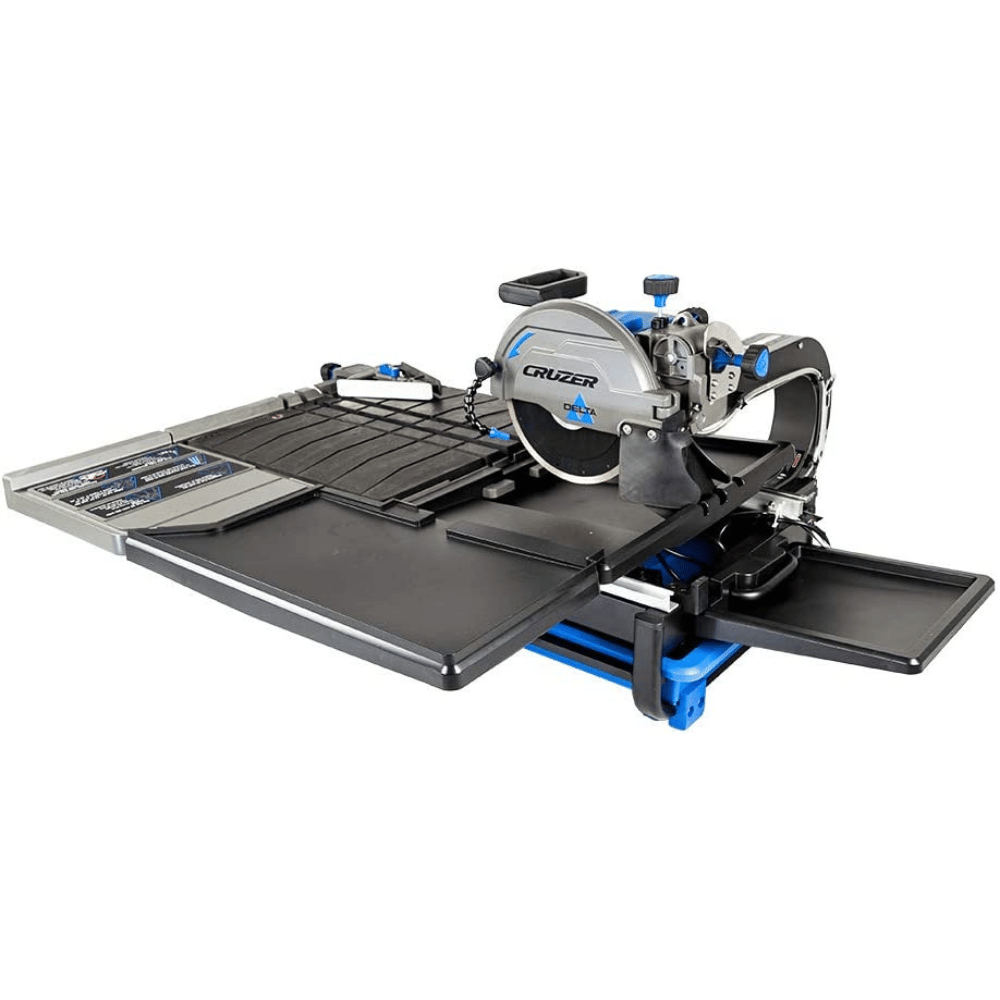
Key Features
- 15 amp motor
- 10-inch Diamond cutting wheel can cut up to 3-3/8″ thick
- 34-inch rip capacity
- 24-inch diagonal cut capacity
Why It’s a Great Choice
If you’re looking for professional wet tile saws, the Delta 96-110 10″ Cruzer Wet Tile Saw is a top-of-the-line saw, which leaves no stone unturned.
This heavy-duty saw features a reliable stainless steel rollers system with 12 precision bearings for unbeatably straight, accurate, and smooth cuts.
The dual water nozzles can be adjusted to ensure optimal water placement on the blade for minimal mess and maximum cutting performance.
Not just powerful and efficient, the Delta 96-110 10″ Cruzer is also incredibly precise – accurate to 1/32″ across 34″ large tiles!
Constructed with top-quality material and superior engineering, you can trust this saw to make perfect and consistent calculations on each job site.
Its accuracy will help keep professional contractors on time while DIYers will have fewer mistakes.
Invest in the Delta 96-110 10″ Cruzer for a tabletop wet tile saw that will guarantee perfect tiles every time – you won’t regret it!
Best Wet Tile Saw with Stand
DEWALT 10-Inch Wet Tile Saw with Stand
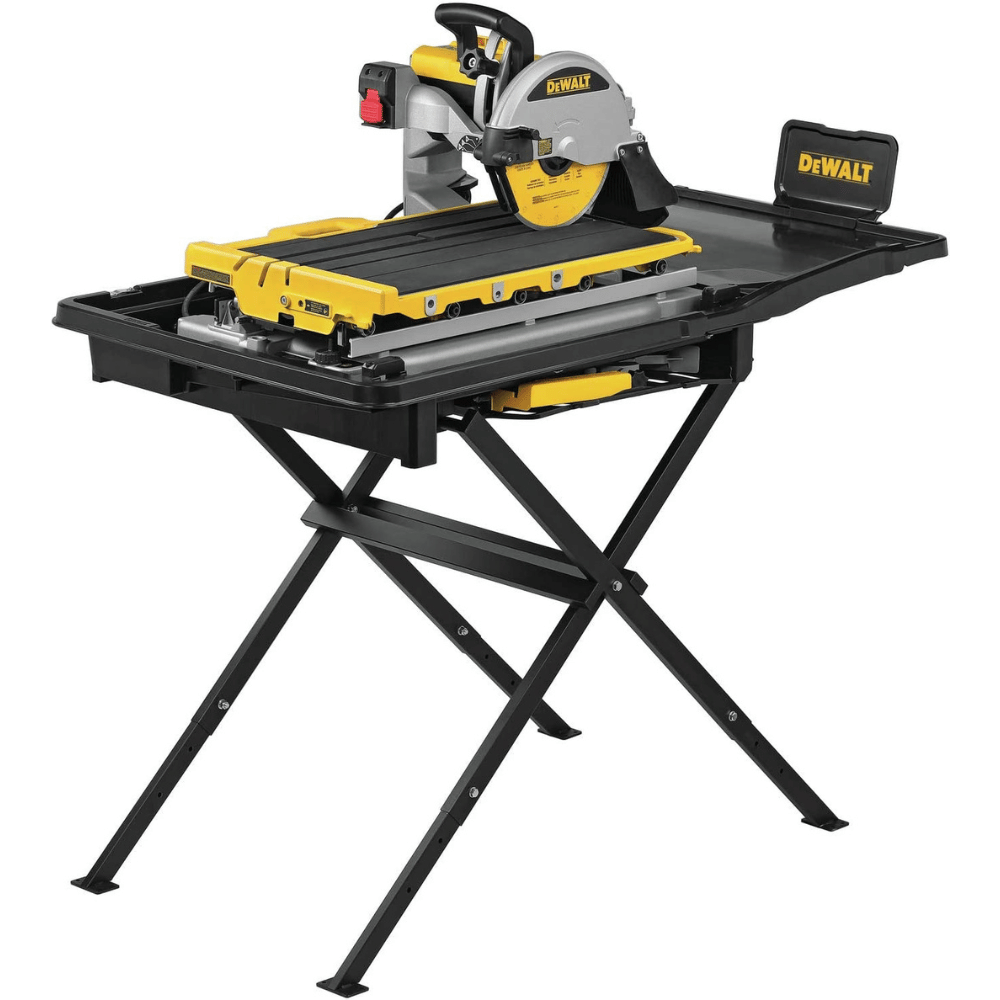
Key Features
- 15 amp motor
- 10-inch blade diameter with blade guard
- 37-inch rip capacity
- 24-inch diagonal cut capacity
Why It’s a Great Choice
The DEWALT Wet Tile Saw is a must-have set for any DIYer, professional, or contractor.
A powerful and durable saw designed to tackle any tile-cutting task, this model provides amazing rip-cut capacity in combination with 18 inches of cutting clearance for quick and efficient cuts to any kind of tile.
The crosscut capacity is second-to-none, allowing you to easily sill cut lengths up to 6 inches wide and plank cut lengths up to 8 x 48 inches at a 30% offset.
Even better, the 28-7/8 inch width from column to cart edge allows you to transport this saw through standard door frames both indoors and outdoors on your job sites.
Plus, the water tray system ensures that tiles up to 18 x 36 inches and 24 x 24 inches are fully contained within the cutting surface, limiting mess during jobs with larger tiles.
Finally, the included stand makes it easy to set up a workspace wherever needed while only weighing 91 lbs—making it perfect for portability and convenience no matter where you’re working.
For anyone who needs a reliable solution for their tiling projects, the 10-Inch DEWALT Wet Saw is an excellent choice!
Best Wet Tile Saw on a Budget
SKIL 7-Inch Wet Tile Saw
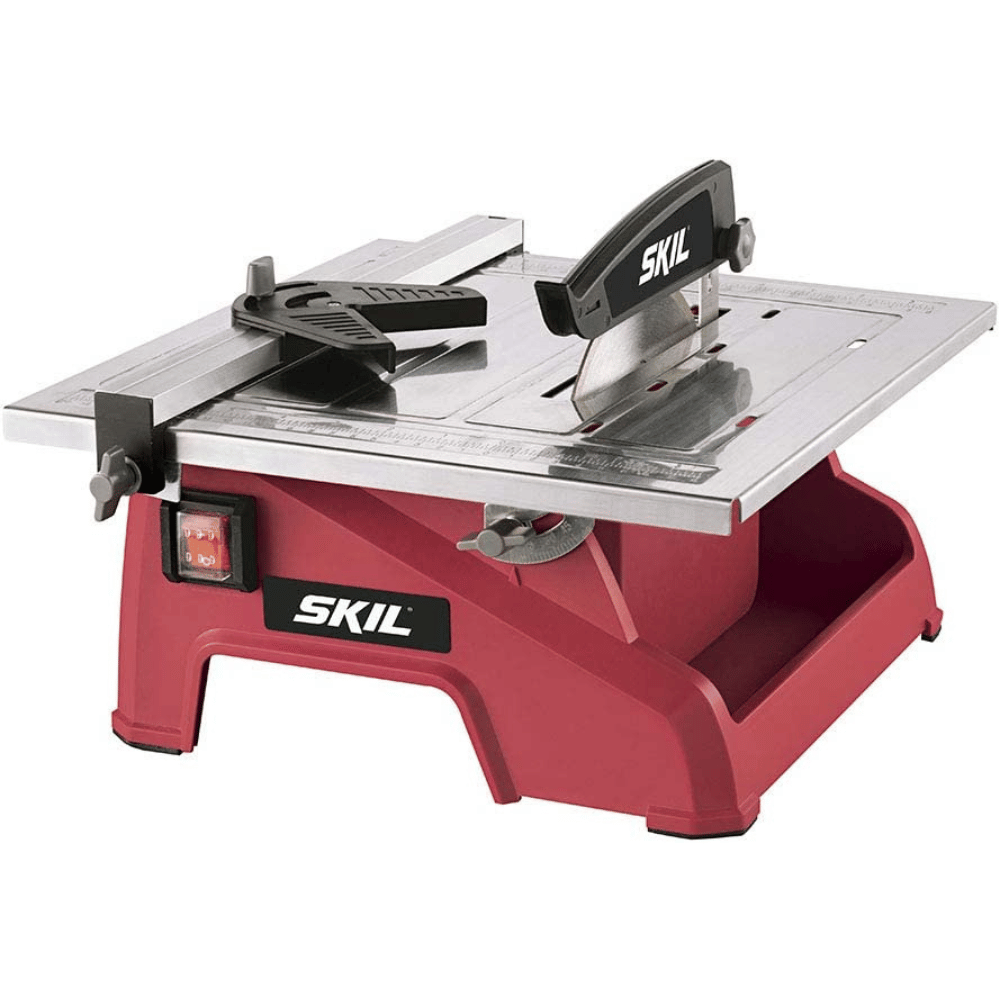
Key Features
- 4.2 amp motor
- 7-inch blade diameter with blade guard
- 12-inch rip capacity
- 7-1/4-inch diagonal cut capacity
Why It’s a Great Choice
Are you looking for a powerful saw that can make all of your DIY tile projects easier?
Look no further than the SKIL 7-Inch Wet Tile Saw.
This amazing piece of machinery has all of the features you need for precision tile cutting up to 12 by 12.
With a blade cooling reservoir, adjustable rip fence, and miter gauge, you get perfect cuts every time.
Plus, it also offers a bevel cut from 0 to 45 degrees for more options in your work.
Whether you are looking to cut tile for a small bathroom renovation or a new kitchen backsplash, this is the saw to tackle the job!
Its stainless steel top ensures stability and durability so it can withstand the toughest jobs without breaking down.
The SKIL 7-Inch Wet Tile Saw is good enough for professionals, but designed with DIYers in mind—it’s sure to take your projects to the next level!
Best Handheld Tile Saw (Wet)
DEWALT Wet Tile Saw (DWC860W)
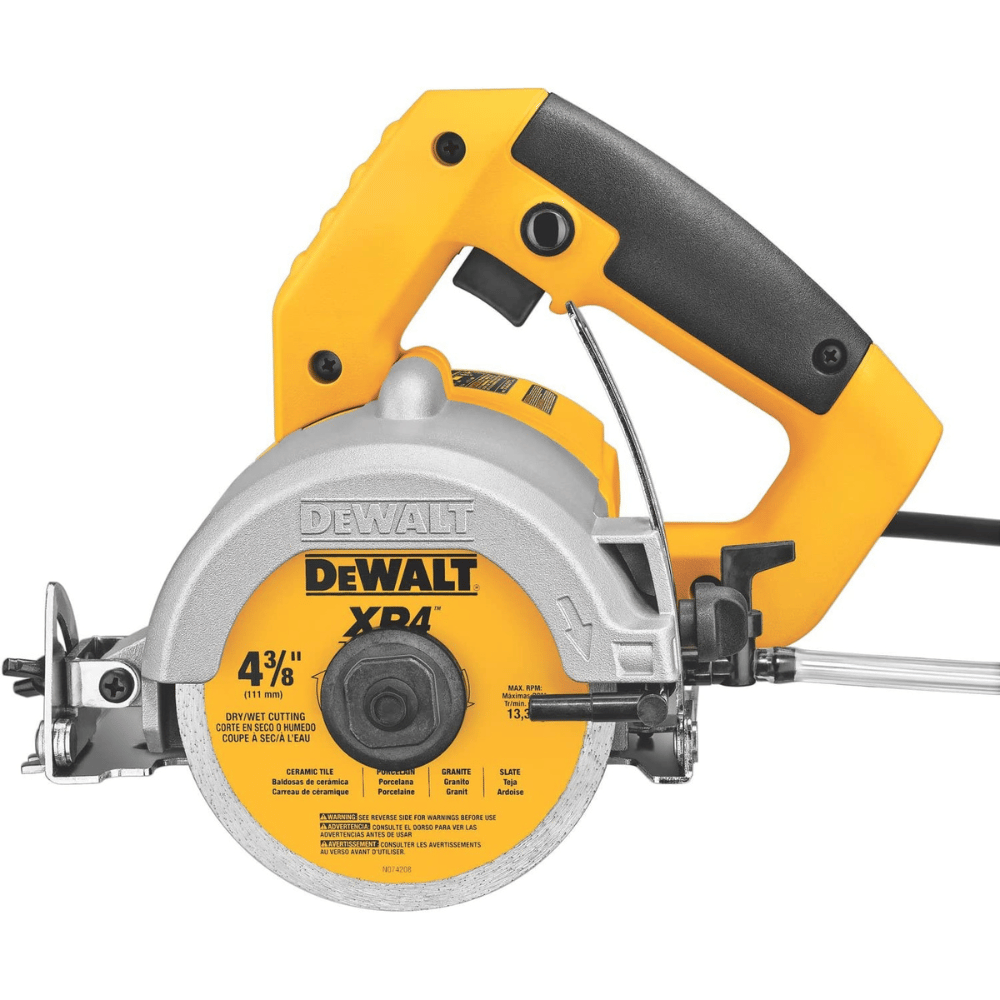
Key Features
- 10.8 amp motor
- 4-3/8-inch blade diameter
- 13-Foot water line
- 45 Degree bevel capacity
Why It’s a Great Choice
The DEWALT Wet/Dry Handheld Tile Cutter is one of the best handheld wet tile saws on the market.
This powerful cutter is equipped with a 10.8 amp (1,300 watt) motor for maximum cutting power to cover your most demanding projects on granite, porcelain, concrete, and other stone materials.
Compact and lightweight at only 6.6 pounds, you won’t feel weighed down while working with it all day long.
With the included Premium 4-3/8-inch diamond blade, you have the versatility to make precision cuts into ceramic and stone materials up to 1-3/8 inches deep – wet or dry!
For even more convenience, the dust-sealed switch protects against contamination while extending the life of the unit and its lock-on button allows for extended use with little user fatigue.
Plus, this tile cutter comes with a 13-foot water line and regulator for wet projects.
Get professional results on your next project with the DEWALT Tile Cutter.
Best Handheld Tile Saw (Dry)
Metabo HPT Masonry Saw
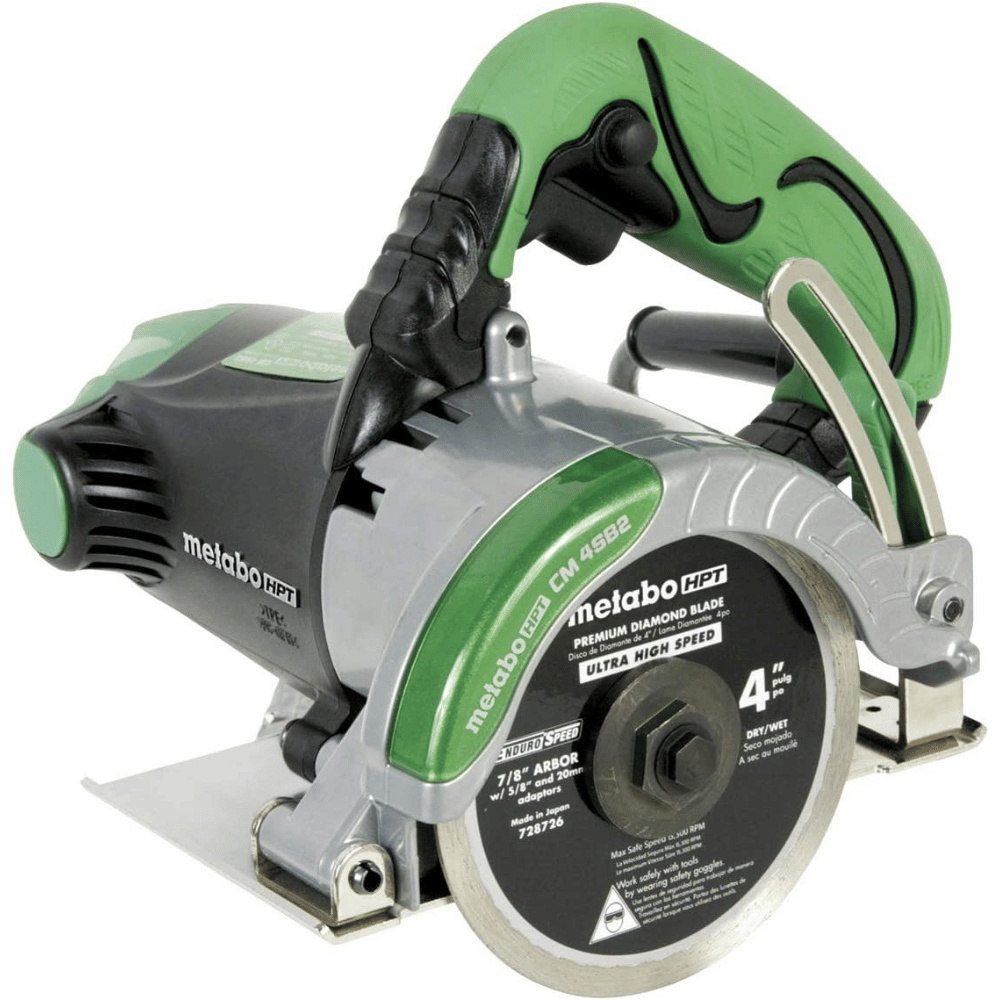
Key Features
- 11.6 amp motor
- 4-inch blade diameter
- 8-1/8″ long and 6.2 lbs
Why It’s a Great Choice
The Metabo HPT Handheld Masonry Saw will make your job easier no matter if you’re a DIYer, a professional, or a contractor.
This saw is ready to take on any challenge with its 11.6 Amp (2,090 Watt Output) motor that offers an impressive 11,500 RPM of no-load speed for greater cutting efficiency, ensuring smooth results no matter what materials you’re working with.
Taking it to the next level is its sealed armature coil which offers protection against dust and debris and is ideal for dry-cutting applications.
Plus, the metal seated ball bearing wards off damage to the motor caused by both high temperatures and vibration, adding even further reliability and performance to this handheld powerhouse.
When it comes to projects big and small, you can trust the Metabo HPT Handheld Masonry Saw!
Buyer’s Guide for the Best Tile Saw
When it comes time to tile your floor or walls, you may have questions about what type of saw is right for the job.
Buying a tile saw can be confusing because there are so many different types and brands available. How do you know which one is right for you?
We’ve put together a list of the most frequently asked questions when looking for a tile saw. This will help you narrow down your options and find the perfect saw for your next project.
What is a tile saw?
A tile saw is a specialized cutting tool designed specifically for cutting tiles. It is typically used by professionals in the construction and renovation industries, as well as DIY enthusiasts who are working on tiling projects at home and need something more than a manual tile cutter.
Tile saws come in different types, including handheld and table-top models. They use a diamond-tipped blade to make precise cuts through ceramic, porcelain, stone, or glass tiles. The blades can be adjusted to cut at different angles or depths depending on the project’s requirements.
Tile saws are an essential tool for anyone who needs to cut tiles regularly. They allow for accurate and efficient cuts that are difficult to achieve with other tools like manual tile cutters or regular saws. With a tile saw, you can create intricate designs and patterns that would be impossible to achieve otherwise.
However, it’s important to note that professional tile saws can be dangerous if not handled correctly. Always wear protective gear such as gloves and goggles when using one, and follow all safety guidelines provided by the manufacturer.
Overall, a tile saw is an invaluable tool for anyone working with tiles regularly. Whether you’re a professional contractor or a DIY enthusiast looking to tackle a tiling project at home, investing in a good-quality tile saw will make your work faster, easier, and more precise.
How does a tile saw work?
The basic working principle of a tile saw involves water and electricity. A water pump is used to spray water onto the blade while it’s rotating. This cools down the blade and prevents it from overheating during use. The water also helps to keep the dust down and lubricates the blade for smoother cuts.
To operate a tile saw, you need to place the tile on a flat surface like a table or tray, then adjust the blade’s height and angle according to your desired cut. Next, turn on the machine and slowly push the tile towards the blade while holding it securely in place. The diamond-tipped blade will then start cutting through the tile with precision.
Some advanced models come with additional features like laser guides or adjustable fences that help align tiles for more accurate cuts. These features can be especially helpful when working on complex designs or patterns.
In summary, a tile saw works by using a diamond-tipped blade that rotates at high speed and creates friction against the tile surface. With proper use and handling, this powerful tool can make precise cuts through tiles of various materials with ease.
What are the different types of tile saws available in the market?
There are several types of tile saws available in the market today, each designed for specific applications and user preferences. Here are some of the most common types:
- Handheld Tile Saws: These are compact, lightweight saws that can be held by hand and used to make quick cuts on small tiles or pieces of tile. They are affordable and easy to use, but not ideal for large-scale tiling projects.
- Wet Tile Saws: These saws have a diamond blade that rotates in water to keep it cool and prevent dust from building up during cutting. They are suitable for cutting all types of tiles with precision and ease.
- Dry Tile Saws: As the name suggests, these saws do not require water during operation, making them suitable for outdoor use or in areas where water is not readily available. However, they tend to produce more dust than wet tile saws.
- Tabletop Tile Saws: These are larger saws that come with a table or work surface on which the tiles can be placed for cutting. They offer more stability and precision than handheld saws and are ideal for larger tiling projects.
- Bridge Tile Saws: Similar to tabletop saws, bridge tile saws feature a bridge-like structure that supports the blade while allowing it to move freely over the tile surface. This design provides greater accuracy and stability when making long cuts.
- Miter Saw: A miter saw is a specialized tool used for creating angled cuts in wood, metal or other materials including tiles.
- Ring Saw: A ring saw is a handheld tool with a circular blade that can be used to cut curves in glass, stone, or porcelain tiles.
When choosing a tile saw, consider your budget, project requirements, and personal preferences before making a purchase decision.
What should I consider before buying a tile saw?
If you’re planning to buy a tile saw, there are several factors you should consider to ensure that you get the right tool for your needs. Here are some important things to keep in mind:
- Blade Size and Type: The size and type of blade you need will depend on the materials you’ll be cutting. For example, a blade designed for ceramic tiles may not work well on stone or porcelain tiles. Make sure to choose a blade that is compatible with the material you’ll be working with.
- Wet vs Dry Cutting: Decide whether you want a wet or dry tile saw based on your project requirements and personal preferences. Wet saws use water to cool the blade and reduce dust, while dry saws do not require water during operation.
- Motor Power: The motor power of the saw determines its cutting ability and speed. If you plan to work with thick or hard materials, choose a saw with more horsepower.
- Portability: Consider how portable the tile saw is if you plan to move it around frequently or take it to job sites. Handheld and tabletop saws are generally more portable than larger bridge or miter saws.
- Cutting Capacity: Check the maximum cutting capacity of the tile saw before purchasing it to ensure that it can handle the size of tiles you plan to cut.
- Price: Tile saw prices vary widely depending on features, brand, and quality. Determine your budget before shopping for a tile saw and compare prices across different brands and models.
- Safety Features: Look for safety features such as a blade guard, a splash guard, anti-kickback systems, and emergency shut-off switches when choosing a tile saw to minimize accidents during operation.
By considering these factors when shopping for a tile saw, you can find one that meets your needs and helps make your tiling projects easier and more efficient.
Can I use a regular saw to cut tiles instead of a tile saw?
While it may be possible to use regular handheld table saws to cut tiles, it is not recommended. Tiles are made from hard materials such as ceramic, porcelain, or stone, which can quickly dull the blade of a regular saw. Additionally, regular saws do not have the necessary cooling mechanisms to prevent overheating and cracking of the tiles during cutting.
Tile saws are specifically designed for cutting tiles and have diamond-embedded blades that can handle hard materials without becoming dull. They also use water to cool the blade and reduce dust during operation, which helps prevent damage to both the blade and the tile.
Using a regular saw instead of a tile saw can lead to uneven cuts, chipping, or breaking of tiles, and can even be dangerous if proper safety precautions are not taken. It is highly recommended that you use a tile saw for cutting tiles to ensure accurate cuts and avoid damaging your materials.
In summary, while using a regular saw may seem like a cost-saving option initially, it is not worth risking damage to your materials or personal injury. Invest in a quality tile saw for precise and safe cuts when working with tiles.
What kind of blades do I need for my tile saw and how often do they need to be replaced?
The type of blade you need for your tile saw will depend on the materials you’ll be cutting. For example, a blade designed for ceramic tiles may not work well on porcelain or stone tiles. Make sure to choose a blade that is compatible with the material you’ll be working with.
Diamond blades are the most common type of blade used for tile saws, as they are specifically designed to cut through hard materials like tiles without becoming dull. They come in different sizes and shapes, so make sure to choose one that fits your tile saw and project requirements.
As for how often they need to be replaced, it depends on several factors such as the frequency of use, the hardness of the materials being cut, and the quality of the blade itself. A good rule of thumb is to replace your blade after every 10-15 hours of use or when you notice signs of wear such as dullness or chipping.
It’s important to regularly inspect your blade for signs of damage or wear and replace it if necessary to ensure accurate cuts and prevent damage to both your materials and equipment. Investing in high-quality diamond blades can also extend their lifespan and save you money in the long run.
In summary, choose a diamond blade that is compatible with your tile saw and project requirements, inspect it regularly for signs of wear or damage, and replace it every 10-15 hours of use or as needed. With proper maintenance and care, your blade can help make your tiling projects easier and more efficient.
How do I maintain my tile saw for optimal performance and longevity?
Maintaining your tile saw is crucial for optimal performance and longevity. Regular upkeep can help prevent breakdowns, ensure accurate cuts, and extend the lifespan of your equipment. Here are some tips on how to maintain your tile saw:
- Clean the water reservoir: The water reservoir in your tile saw should be cleaned after each use to prevent the buildup of debris or sediment that can clog the pump and reduce its efficiency.
- Replace worn parts: Check your blade, belts, bearings, and other moving parts regularly for wear and tear. Replace any worn or damaged parts immediately to avoid further damage to your equipment.
- Lubricate moving parts: Apply lubricant to the moving parts of your tile saw such as bearings, rails, and slides to keep them running smoothly and prevent rusting.
- Keep the blade sharp: A dull blade can cause chipping or breaking of tiles during cutting. Sharpen the blade regularly or replace it as needed for optimal performance.
- Store properly: When not in use, store your tile saw in a dry place away from moisture or extreme temperatures that can damage the machine’s components.
- Follow manufacturer instructions: Always follow the manufacturer’s instructions for maintenance and operation to avoid damaging your equipment or voiding any warranties.
By following these maintenance tips, you can ensure that your tile saw operates at its best capacity for many years to come. Remember that regular upkeep is key to maintaining optimal performance and extending the lifespan of your tools.
Can I use my tile saw to cut other materials besides tiles, such as stone or glass?
While tile saws are typically designed to cut through ceramic, porcelain, or stone tiles, they can also be used to cut other materials such as stone or glass. However, it’s important to note that not all tile saws are created equal and may not be suitable for cutting certain materials.
For example, if you plan on cutting glass, you’ll need a specialized blade specifically designed for that purpose. Using the wrong type of blade can cause the glass to crack or shatter during cutting. Similarly, if you plan on cutting thicker and harder stones like granite or marble, you may need a more powerful tile saw with a higher horsepower motor.
Before using your tile saw on any material besides tiles, make sure to read the manufacturer’s instructions and check if your equipment is suitable for the task. It’s also important to wear appropriate safety gear such as eye protection and gloves when working with any type of material.
In summary, while it is possible to use a tile saw for cutting other materials besides tiles like stone or glass, it’s important to use the right type of blade and ensure that your equipment is suitable for the job. Always follow proper safety measures and consult the manufacturer’s instructions before attempting any new cutting tasks with your tile saw.
How can I ensure accuracy when cutting tiles with my tile saw?
Cutting tiles with a tile saw can be a precise process that requires accuracy to ensure a perfect fit. Here are some tips on how to ensure accuracy when cutting tiles with your tile saw:
- Measure and mark: Before cutting, measure the tile and mark the cut line with a pencil or marker. Double-check your measurements to avoid mistakes.
- Use a guide: A guide can help keep the tile straight and prevent it from moving during cutting. You can use a straight edge, clamps, or even make your own T-square.
- Check blade alignment: Make sure that the blade is properly aligned before starting to cut. Adjust the blade if necessary to ensure that it is perpendicular to the table.
- Cut slowly and steadily: Cutting too quickly or forcefully can cause chipping or breaking of tiles. Cut slowly and steadily, letting the blade do the work for you.
- Keep the water flowing: The water in your tile saw’s reservoir helps cool down the blade and prevent overheating, which can cause inaccurate cuts or damage to your equipment.
- Clean up debris: Debris such as dust or small pieces of tile can accumulate on the surface of your saw, making it difficult to see where you’re cutting. Regularly clean up debris for better visibility.
By following these tips, you can ensure accurate cuts when using your tile saw and achieve professional-looking results for all of your tiling projects.
The Best Tile Saw for You
Whether you’re a beginner or a professional tile installer, the right tile saw can make all the difference.
The saws we’ve recommended are sure to help complete your projects quickly and efficiently – so don’t hesitate to check the prices now and order yours today.
With their build quality and ease of use, any model in our tile saw review is sure to be a valuable addition to your toolbox.
Weigh your options carefully, take into consideration which features matter most for your projects, and click the links to Check Prices on Amazon and order yours now!