How to Use an Angle Grinder for Your DIY Needs

Are you looking to learn how to use an angle grinder?
This versatile tool is perfect for sanding, grinding, and cutting tasks. With advances in lithium-ion battery technology, angle grinders have become even more convenient to use. However, it’s important to approach this tool with caution due to its steep learning curve.
To ensure your safety, it is crucial to wear personal protection gear such as hearing protection, long sleeves, gloves, and a face shield. Mishandling the cutting wheel can lead to serious injuries, so it’s recommended to perform a ring test to ensure its integrity.
In this article, we will guide you through the proper use of an angle grinder, including information on the different types of wheels and accessories, proper positioning and technique, surface grinding, cutting techniques, common mistakes to avoid, and additional resources and tips.
So let’s get started and master the art of using an angle grinder safely and effectively!
Key Takeaways
- Angle grinders should always be used with personal protection gear, such as hearing protection, long sleeves, gloves, and a face shield.
- Proper inspection and testing of grinding wheels is necessary to ensure they are in good condition and properly mounted.
- Careful positioning and directing sparks and debris away from the body can help reduce the risk of injury when using an angle grinder.
- It is important to use the appropriate accessories and match their RPM to the grinder to prevent accidents. Toothed blades should never be used on an angle grinder.
Angle Grinders are Versatile Tools
So, you’re probably wondering, what exactly is an angle grinder? Well, it’s a powerful tool that’s controlled by a trigger, paddle, or switch and is used to cut or grind a variety of materials.
An angle grinder spins a disc at high speed, making it perfect for all your diy sanding, grinding, and cutting needs. The main components of an angle grinder are the grinding wheel and the cutting wheel. The grinding wheel is used for surface grinding such as removing rust from a metal surface.
On the other hand, the cutting wheel is used for cutting applications, and it should be used with a guard on top and steady pressure applied. With its versatility and ability to handle various tasks, an angle grinder is truly an essential tool in any workshop or toolbox.
Safety and Personal Protection
Ensure your safety and protect yourself by wearing the necessary personal protection gear, such as hearing protection, long sleeves, gloves, and a face shield, when operating this powerful tool.
It’s also important to wear a dust mask to prevent inhaling any harmful particles.
When wearing a face shield, make sure it covers your entire face to shield against flying debris.
Always check that the blade guard is in place and functioning properly before using the angle grinder.
Be cautious of sharp edges on the tool and avoid contact with them.
Remember to inspect the abrasive wheels for any damage before using them, and make sure they’re securely mounted and balanced.
Following these safety precautions will help minimize the risk of accidents and injuries.
Types of Wheels and Accessories
When operating this powerful tool, it’s crucial to have the right types of wheels and accessories to enhance your work and ensure optimal results.
Angle grinders can be used with various types of wheels and accessories, depending on the task at hand. The most common type of wheel used with an angle grinder is the grinder wheel, which is designed for grinding, cutting, and shaping metal. It can also be used to sharpen lawn mower blades and grind away mortar.
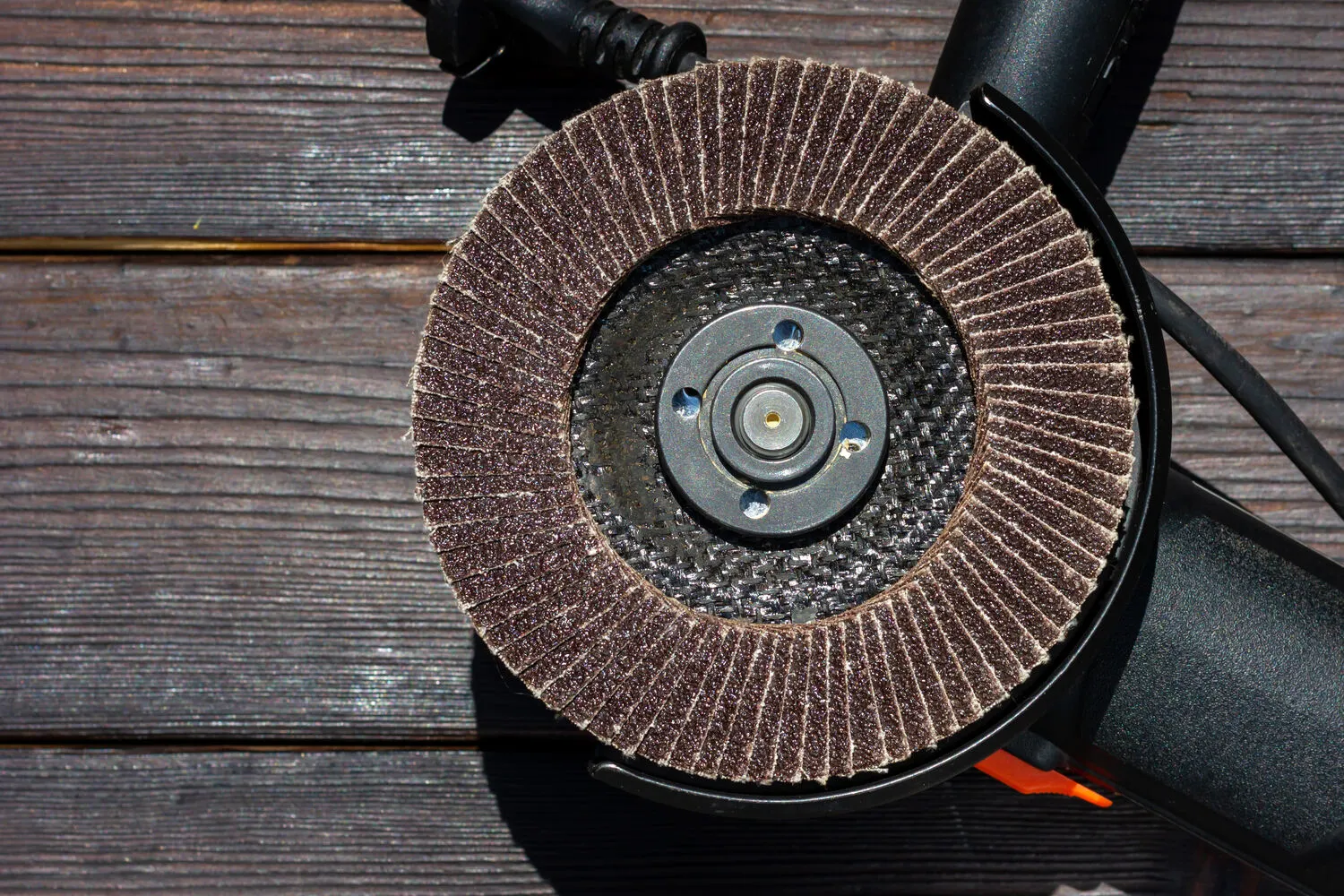
Another popular accessory is the flap disc, which is great for grinding down welds or removing rust spots.
It’s important to choose the appropriate wheel or accessory for your specific needs, as using the wrong one can lead to accidents or damage to the tool.
Always make sure that the wheels and accessories you use are compatible with your angle grinder and other power tools.
Proper Positioning and Technique
To achieve optimal results and reduce the risk of injury, it’s important to position yourself correctly and adopt the proper technique when using an angle grinder.
When using an angle grinder to cut, make sure to position yourself so that you have a stable stance and a clear line of sight to the workpiece. Hold the grinder with both hands, keeping a firm grip on the handle and maintaining control at all times.
The angle of the grinder should be between 5° to 10° for sanding applications, while for surface grinding, use the flat part of the wheel at a 20° to 30° downward angle.
It’s crucial to keep the grinder away from your body and direct sparks and debris away from yourself and others.
By following these positioning and technique guidelines, you can safely use an angle grinder and achieve the desired results.

How to Use a Grinder – Surface Grinding with a Grinding Wheel
An angle grinder is a great tool for achieving a smooth and polished surface. This requires employing the proper technique and positioning yourself correctly. To surface grind with an angle grinder, make sure you have the appropriate grinding discs and a grinder fitted with a guard.
Start by firmly holding the grinder with both hands, keeping a 20°-30° angle to the workpiece. Move the grinder back and forth, using even pressure, to grind down the surface. It’s important to focus on flat areas and avoid plunging the grinder, as this can cause kickback and loss of control.
Always direct sparks and debris away from your body for safety. Remember to wear personal protection gear and keep the guard on the grinder at all times.
How to Use an Angle Grinder to Cut with a Cutting Wheel
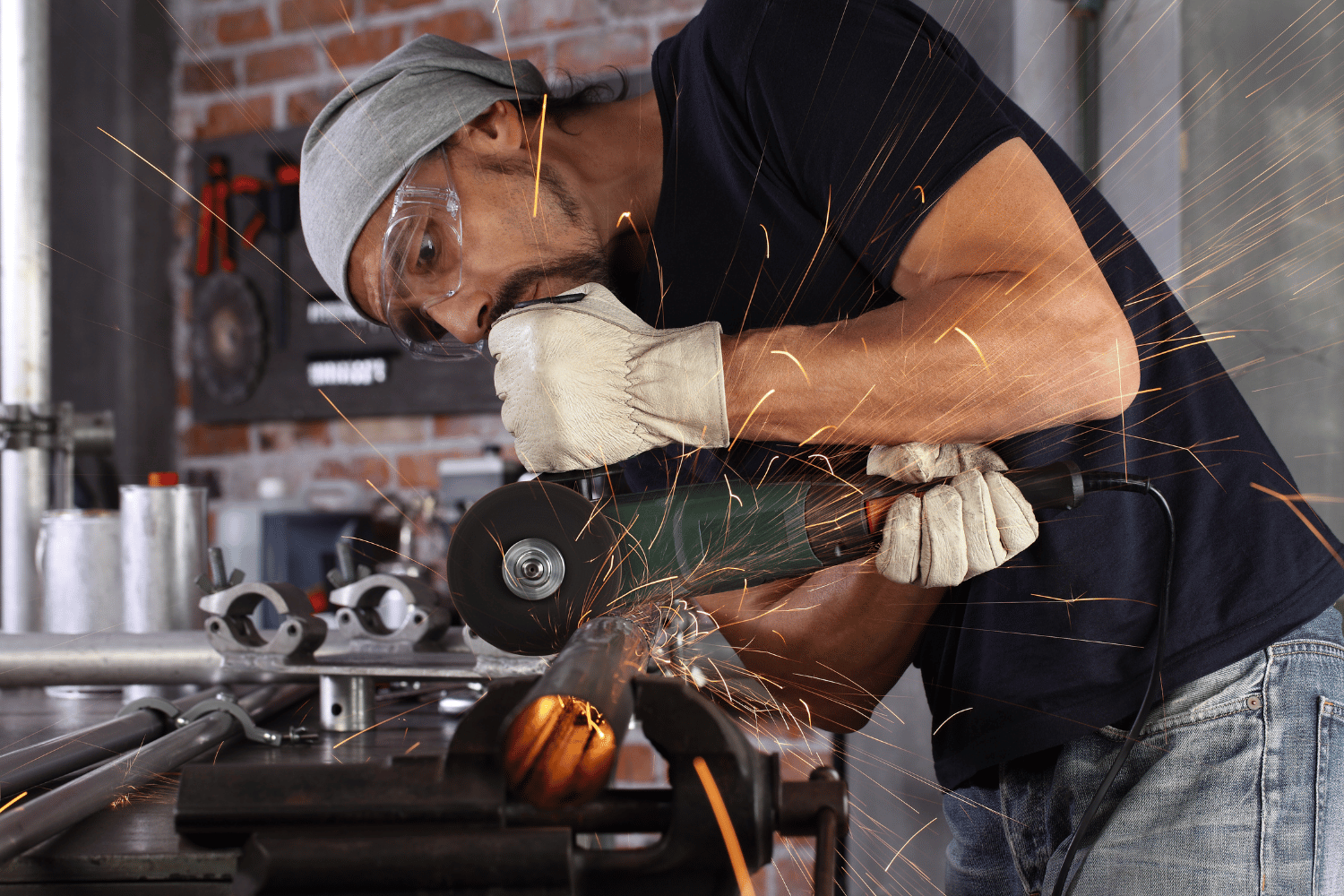
For a precise and controlled cutting technique, position yourself in a stable stance and maintain a firm grip on the tool.
When using an angle grinder, it’s important to remember that it can be used not only to grind, but also to cut various materials. Angle grinders are great for cutting because they’re versatile and powerful.
There are different types of cutting techniques that can be used with an angle grinder, such as straight cuts, curved cuts, and plunge cuts. Straight cuts are made by slowly moving the grinder along the marked line, while curved cuts require careful maneuvering of the tool.
Plunge cuts should be avoided as the grinder may kick back and cause a loss of control. Always remember to use the appropriate cutting wheel for the material you’re working with and to keep the guard on the angle grinder at all times for safety.
Common Mistakes to Avoid
Avoiding common mistakes when using an angle grinder can save you from potential accidents and ensure a smooth and successful project.
One common mistake to avoid is not considering the weight of the tool. Angle grinders can be heavy, especially when holding them for extended periods. Make sure to use both hands and maintain a firm grip to prevent the tool from slipping or causing injury.
Another mistake is not respecting the power of the spinning blade. Always keep a safe distance from the blade and avoid putting excessive pressure on it, as this can cause it to kick back or break.
Lastly, a mistake often made is not using angle grinders for their intended purpose, such as using them for metal cleaning. Using the wrong accessory or applying the tool incorrectly can result in damage to the grinder or injury to the user.
Frequently Asked Questions
How do I choose the right angle grinder for my needs?
Choose the right angle grinder for your needs by considering the size, power source, and intended use. Determine the disc size, power supply (corded or cordless), and the specific tasks you’ll be using it for (grinding, cutting, or sanding).
Can I use an angle grinder for polishing or buffing?
Yes, you can use an angle grinder for polishing or buffing. Attach a polishing wheel or buffing pad to the grinder and apply polishing compound. Keep the grinder at a 5°-10° angle and move it in a circular motion for best results.
What are the different types of guards available for angle grinders?
The different types of guards available for angle grinders include adjustable guards, fixed guards, and removable guards. These guards are designed to protect you from sparks, debris, and accidental contact with the rotating disc.
How do I maintain and clean my angle grinder?
To maintain and clean your angle grinder, start by disconnecting the power source and removing any attachments. Use a brush or compressed air to remove debris, and wipe down the grinder with a damp cloth. Regularly inspect and replace worn or damaged parts.
Are there any alternative tools or techniques for the tasks that can be done with an angle grinder?
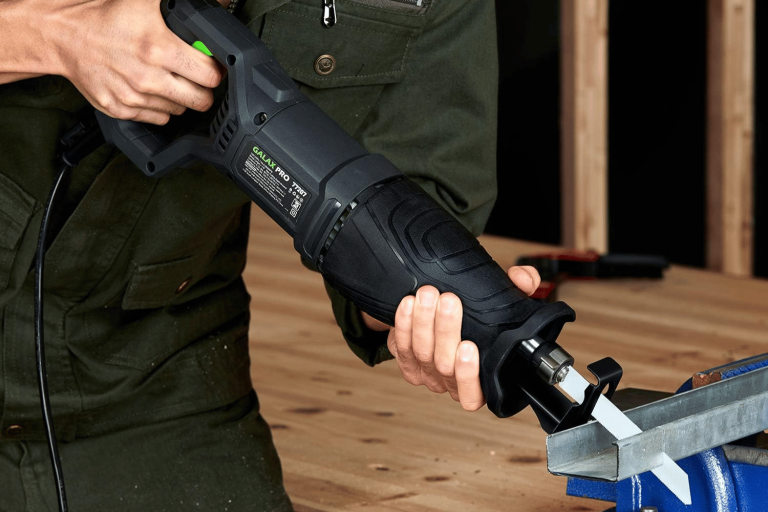
Yes, there are alternative tools and techniques for the tasks that can be done with an angle grinder. For sanding, you can use a belt sander or a random orbital sander. Cutting can be done with a reciprocating saw or a circular saw.
Final Thoughts
Using an angle grinder can be a versatile and efficient tool for various tasks. However, it’s crucial to prioritize safety and take necessary precautions to prevent accidents.
Wearing the appropriate personal protection gear and properly inspecting the grinding wheel are essential steps.
Mastering proper positioning and technique, as well as understanding the different cutting techniques, can help minimize the risk of injury.
By avoiding common mistakes and following the guidelines, you can make the most out of your angle grinder safely and effectively.