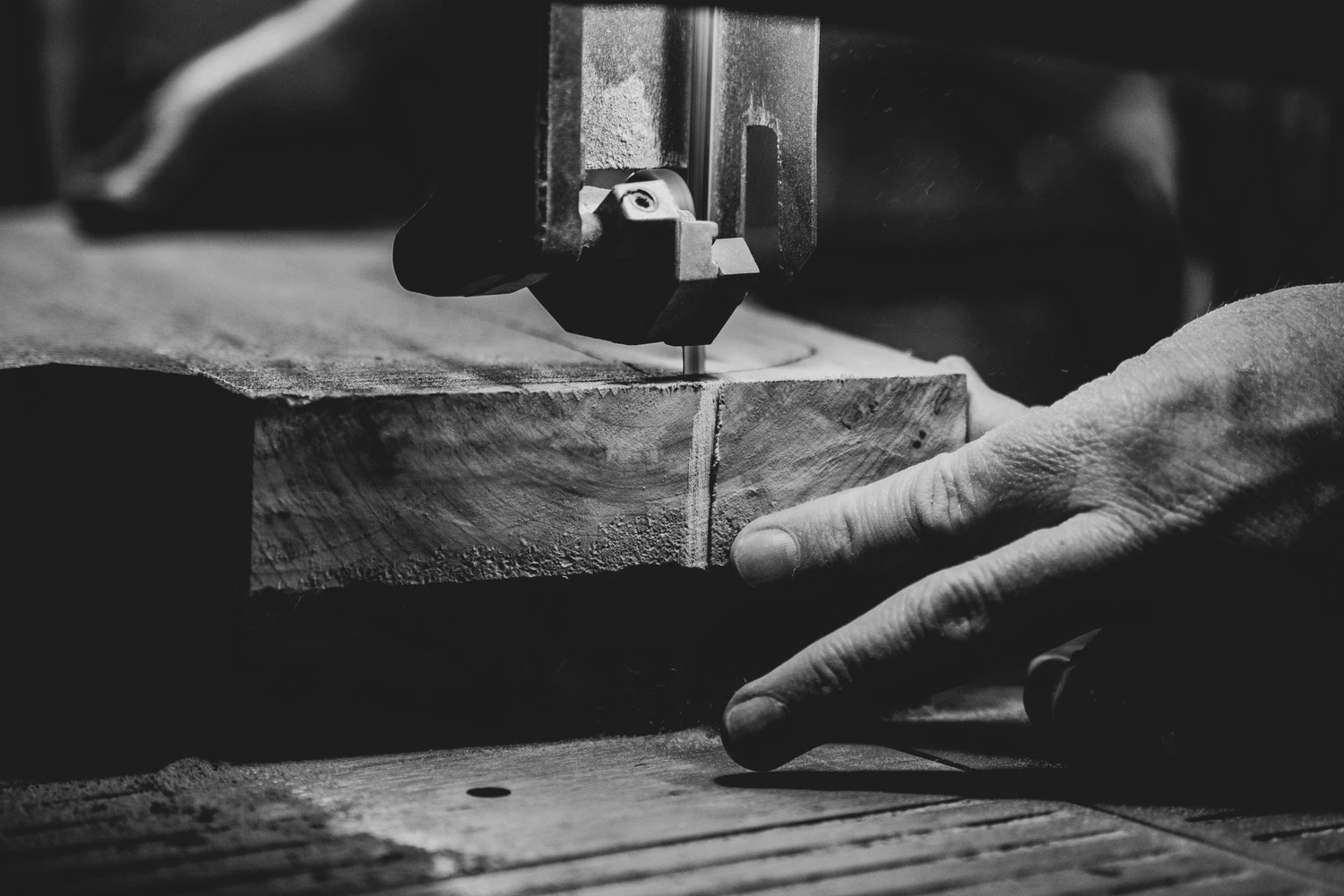
What is a Band Saw: How to Use and Master Your New Saw

As a beginner, you may be wondering what exactly a band saw is and how to use it effectively. Well, look no further because this article will provide you with all the information you need to become a master of this power tool.
A band saw is a powerful cutting tool that uses a continuous metal blade wrapped around two wheels to make intricate and precise cuts in wood, metal, and other materials. Unlike other types of saws, such as circular or jigsaw, the blade of a band saw moves continuously in one direction, allowing for smoother and more accurate cuts.
With its versatility and precision, the band saw has become an essential tool in many woodworking shops and metalworking industries.
So let’s dive into the world of band saws and learn how to use them like a pro!
Key Takeaways
- Choosing the right band saw requires assessing project requirements, size and capacity, motor power and speed options, and appropriate blades.
- Blade width, tooth configuration, and material affect suitability for the project, with narrower blades for tighter curves, wider blades for thicker materials, and coarser TPI blades for thicker woods.
- Safety and maintenance procedures are essential, including proper setup and adjustment techniques, regular cleaning routines, and following manufacturer’s instructions.
- Advanced band saw techniques include precise cuts and joinery, curved cutting techniques, and resawing thicker materials, with the use of a fence or miter gauge for accurate angles and measurements.
Understanding the Bandsaw
Before you start cutting, it’s important to understand what a band saw is and how it works.
There are different types of band saws available, but they all have some common components and parts such as the blade, wheels, guides, and motor.
As you begin to use your band saw, mastering its features and functionalities will be key in achieving accurate and efficient cuts.
What is a band saw?
Understanding the mechanics of a band saw is crucial for anyone looking to make precise cuts in their woodworking projects. A band saw consists of a long, continuous blade that moves around two wheels, cutting through materials as it goes.
The blade’s teeth are responsible for the cutting action, which can be adjusted to suit different types of materials and cutting needs. While a band saw is primarily used for making straight cuts, it can also cut curves with ease when equipped with the right blade.
Additionally, resawing – or slicing thick pieces of wood into thinner sections – can be done accurately and efficiently using a band saw. Learning how to use this tool effectively will allow you to master your woodworking skills and create professional-quality pieces.
Now that you understand what a band saw is and how it works, let’s move on to exploring different types of band saws available on the market today.
Different types of band saws
Now, you’re probably wondering what types of saws are out there for you to choose from. When it comes to band saws, there are different options available depending on the type of work you plan on doing.
One type is the vertical bandsaw, which is ideal for cutting curves and intricate shapes in thin materials like wood or plastic.
Another option is the horizontal bandsaw, which can handle larger pieces and cuts straight lines with ease.
There are also portable bandsaws that allow you to take your work anywhere and benchtop models that are perfect for small workshops.
It’s important to consider what type of saw will best suit your needs before making a purchase. With so many different types of band saws available, it’s essential to do your research and pick the right one for your specific project needs.
Moving forward into components and parts of a band saw, let’s dive deeper into understanding how to use a band saw effectively.
Components and parts of a band saw
Exploring the inner workings of a band saw can be fascinating, especially when you take a closer look at its components and parts. As a woodworker, understanding the different elements that make up this powerful tool can help you master it more effectively.
The bandsaw blade is arguably the most important part of the machine since it is responsible for cutting through wood. Blades come in different sizes and are classified by their teeth per inch (TPI), which determines their suitability for various types of cuts.
Another critical component is the blade guide, which helps maintain proper alignment during cuts. Other essential parts include the wheels that drive the blade, guides that control its movement, and tensioning mechanisms that ensure optimal blade performance.
Knowing how these components work together to produce clean cuts will empower you to use your band saw with confidence and precision.
In the next section about common features and functionalities of band saws, we’ll explore additional ways to harness this versatile tool’s power while delivering precise results on every project you undertake.
Common features and functionalities of band saws
By familiarizing yourself with the various features and functions of a band saw, you can optimize its capabilities and achieve greater precision in your woodworking projects.
Band saws are versatile tools that offer a wide range of usage, from cutting curves to ripping straight lines. The saw blade is a vital component that determines the band saw’s ability to cut through a variety of materials, including wood, metal, and plastics. Different blades for woodworking can be selected based on their width, teeth per inch (TPI), and material composition.
Additionally, band saws come equipped with features such as adjustable blade guides and tensioning mechanisms that allow for precise cuts and smoother operation. Understanding how these common functionalities work will give you greater control over your band saw’s performance when working on different types of projects.
Now that you have an understanding of the key aspects of a band saw’s functionality, it’s time to consider choosing the right one for your needs.
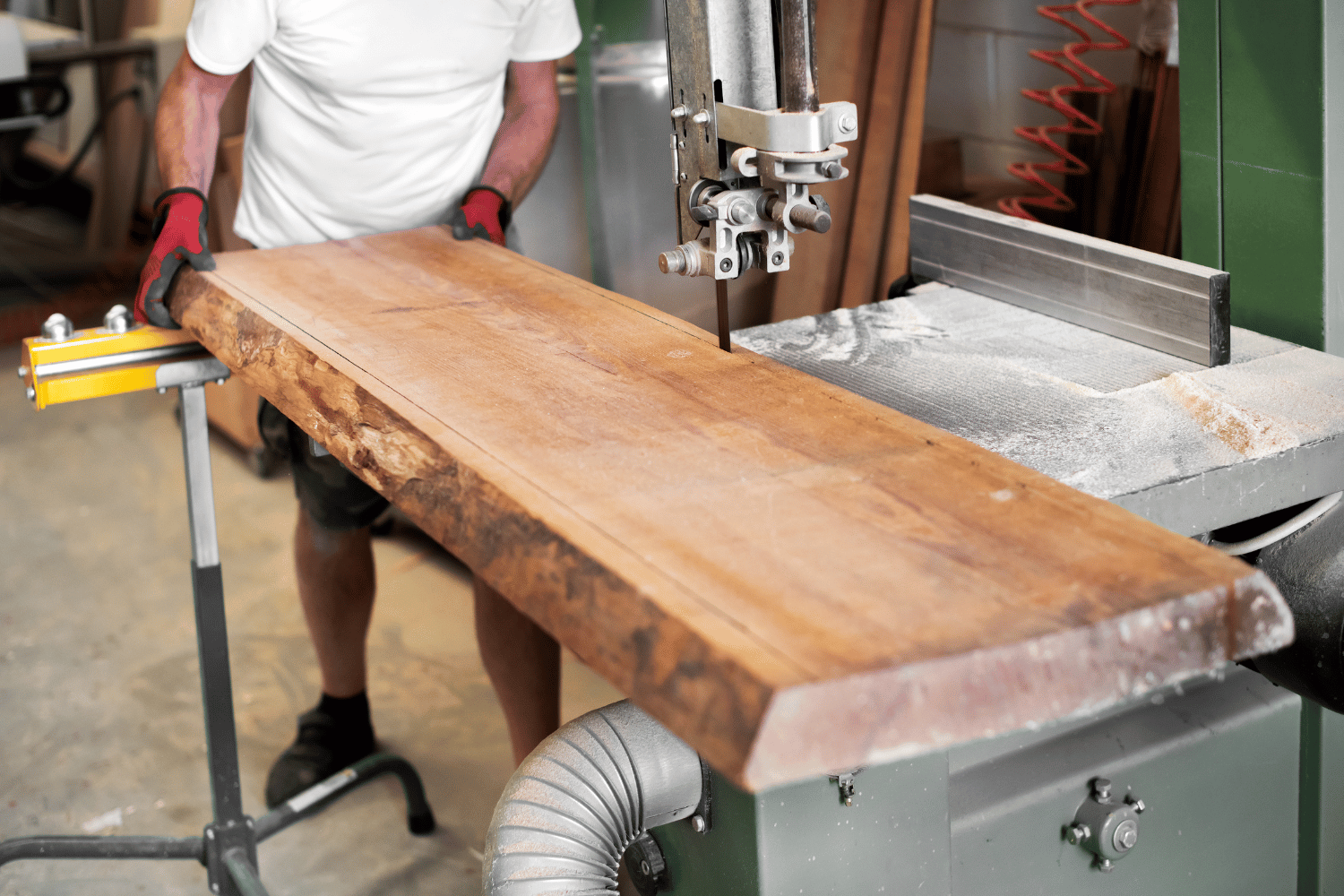
Choosing the Right Type of Band Saw
When it comes to choosing the right band saw, there are several key points you need to consider.
Firstly, you should assess your needs and project requirements to determine what type of saw would suit you best.
Next, think about the appropriate size and capacity that will allow you to work efficiently and effectively.
You’ll also want to evaluate motor power and speed options, blade considerations such as width, tooth configuration, and material, as well as additional features and accessories that may be useful for your projects.
Assessing your needs and project requirements
Assess what you need and want from your project before diving into using your band saw. When working with a bandsaw, it’s crucial to know the type of work you’ll be doing and the materials you’ll be cutting.
If you’re dealing with a large piece of wood or lumber, it’s important to have a larger blade size for better precision and accuracy. On the other hand, if you plan on cutting metal, then selecting a band saw that has a higher horsepower motor would be more appropriate.
Assessing your needs and project requirements allows you to select the right bandsaw for your specific task, which ultimately leads to smooth and efficient cuts. Determining the appropriate size and capacity is essential when choosing a band saw for your workshop.
Determining the appropriate size and capacity
Figuring out the right size and capacity is key to choosing the perfect bandsaw for your specific needs. When selecting a band saw, consider the types of materials you’ll be cutting and the maximum width of those materials.
If you plan to rip large pieces of wood, you’ll need a larger saw with more power than if you’re simply making small cuts on a benchtop model. Look for a two-wheel design, as this will provide better stability and precision when cutting.
A scroll saw may be too small for your needs, so make sure to choose an appropriate size bandsaw that can handle the job at hand. Keep in mind that blade moves are not only up and down but also back-and-forth movements which require ample space between the blade guides.
Evaluating motor power and speed options comes next when determining what band saw is best suited for your project requirements.
Evaluating motor power and speed options
Now that you’ve determined the appropriate size and capacity of your band saw, it’s time to evaluate motor power and speed options. The purpose of a band saw is to cut curved or irregular shapes in various materials, so it’s important to consider the type of band saw blades you’ll be using and how they’ll interact with the motor power and speed.
Here are some factors to consider when evaluating motor power and speed options:
- Blade tension: Depending on the material you’re cutting, you may need more or less tension on your blade. This can affect the overall power needed for your motor.
- Blade thickness: Thicker blades require more power to cut through materials than thinner blades do.
- Material hardness: Different materials have varying levels of density, which can impact how quickly or slowly you need your blade to move.
- Speed controls: Some band saws come with variable speed controls that allow you to adjust the speed based on what you’re cutting.
By taking these factors into account, you’ll be able to select a motor power and speed option that works best for the type of work you’ll be doing with your band saw.
Now let’s talk about blade considerations (width, tooth configuration, material).
Blade considerations (width, tooth configuration, material)
When choosing the right blade for your project, it’s important to consider factors such as width, tooth configuration, and material. A band saw is a versatile saw to cut through wood or metal with a continuous band of toothed metal. The width of the blade is an essential factor when selecting the proper blade for your project. A narrower blade allows tighter curves and intricate patterns to be cut, while a wider one is suitable for thicker materials. Tooth configuration refers to the number and pattern of teeth per inch (TPI). Coarser TPI blades are ideal for cutting thicker woods, whereas finer TPI blades are better suited for thinner materials and metals. Lastly, the material of the blade plays a critical role in its durability and longevity during use. For instance, carbon steel blades are excellent for general-purpose cutting tasks but tend to wear out faster than bi-metal blades that can withstand more demanding jobs. To help you understand these aspects better, refer to this table:
| Blade Width | Tooth Configuration | Material |
| 1/8″ – 1/4″ | 6-14 TPI | Carbon Steel |
| 3/8″ – 1/2″ | 10-18 TPI | Bi-Metal |
| 5/8″ – 3/4″ | Variable TPI | Carbide-Tipped |
By considering these factors while selecting your bandsaw blade type, you’ll gain better control over how you use it and achieve your desired results with ease. Now let’s delve into additional features and accessories to consider when mastering your new tool without losing momentum in your work process!
Additional features and accessories to consider
To enhance your experience with this new saw, you’ll want to consider some additional features and accessories.
One important feature to consider is the blade guide system, which keeps the blade aligned during use for precise cuts.
You may also want to invest in a fence or miter gauge for accurate angle cuts.
Dust collection systems are also available to keep your workspace clean and free of debris.
Other useful accessories include tension gauges, which help ensure proper blade tension, and mobility kits for easy transport of the saw.
By considering these additional features and accessories, you can fully master your band saw and take on a variety of cutting tasks with ease.
As you become more familiar with using your new saw, it’s time to explore different applications for it in woodworking and other projects.

Band Saw Applications
As a band saw user, you can expect to have a versatile tool that’s useful in various applications. One of the most common uses for a band saw is woodworking projects. It’s also great for metalworking and fabrication applications, allowing you to easily cut curves and intricate designs.
Additionally, the band saw is perfect for resawing and ripping lumber, as well as working with other materials such as plastic or foam.
Woodworking projects
You’ll love the woodworking projects you can create with your new band saw. It’s perfect for cutting intricate shapes and patterns in wood thanks to its versatile blade and table top.
Before starting any project, make sure you know how to use your band saw properly. This involves adjusting the blade tension and tracking, as well as selecting the appropriate speed for the type of wood you’re working with.
When making cuts, always keep your hands clear of the blade and be sure to wear safety glasses.
Your band saw will quickly become a go-to tool in your workshop, whether you’re creating decorative woodwork or building furniture.
Now let’s move onto metalworking and fabrication applications…
Metalworking and fabrication applications
Now that you’ve tackled some woodworking projects with your band saw, it’s time to explore its metalworking and fabrication applications. The bandsaw is a versatile tool that can cut through a variety of materials, including toothed metal and other tough materials. Its continuous band allows for smooth, precise cuts that are perfect for creating intricate designs or cutting curves in your metalwork projects. To help you visualize the possibilities, take a look at this table:
| Material | Thickness (inches) | Recommended Blade Size |
| Aluminum | 1/8 – 1/4 | 6-10 TPI |
| Brass | 3/16 – 1/2 | 14-18 TPI |
| Copper | 3/16 – 5/8 | 14-18 TPI |
| Steel | Up to 3 | Variable |
With the right blade size and technique, your bandsaw will become an indispensable tool in all your fabrication needs. Next up, we’ll dive into how to use your band saw to cut those curves and intricate designs you’ve been dreaming of.
Cutting curves and intricate designs
To achieve precise and intricate designs in metalworking, it’s essential to have the right blade size and technique when cutting with a band saw. The band saw is a versatile tool that can be used for various applications, including cutting curves and intricate designs.
When using a band saw for this purpose, it’s crucial to choose a flexible blade that allows you to make tight turns without breaking or damaging the material. Additionally, you should adjust the blade guides and tension according to the thickness of the material you’re working with.
To cut curves accurately, move the material slowly and steadily while keeping your eyes on the saw blade’s teeth. Remember always to keep your hands away from the blade’s path and use push sticks or featherboards if necessary. Finally, practicing on scrap pieces before working on your project will help you master this technique effectively.
With these tips in mind, you’ll be able to create stunning designs with your band saw effortlessly.
Moving forward into our next section about resawing and ripping lumber…
Resawing and ripping lumber
If you want to create thinner boards or slices of wood from a thicker piece, resawing is the process of cutting that board in half.
To do this on your band saw, first ensure that you have the appropriate blade for ripping lumber. A wider blade with fewer teeth per inch will make the job easier and provide cleaner cuts.
Adjust the height of your blade guide to just above the wood you’re cutting, and set your fence to the desired width of your cut. Slowly feed the wood through the blade, keeping it tight against the fence at all times. This will give you a straight and even cut without any wandering or deviation from your intended path.
Remember to go slowly and let the saw do the work, never forcing it through too quickly or trying to push too hard against it.
Once you have finished resawing your lumber, move on to working with various materials (e.g., plastic, foam) by adjusting your blade accordingly and following similar techniques for precision cutting.
Working with various materials (e.g., plastic, foam)
You’ll be amazed at the versatility of your trusty band saw as you delve into working with a variety of materials, including plastic and foam. The band saw blade is designed to cut through different materials with precision and accuracy, allowing you to create intricate shapes and designs. As a machine operator, it’s important to understand the proper techniques for cutting each material type. For plastic, you’ll want to use a fine-toothed blade that can handle delicate cuts without melting or warping the material. Foam, on the other hand, requires a larger toothed blade that can quickly slice through the soft material without tearing or snagging. When working with either material, it’s crucial to maintain control of the piece as it moves through the blade by using push sticks or clamps to avoid injury and ensure precise cuts every time. Remember to always wear safety gear such as goggles and gloves when operating your band saw for added protection. Now that you’ve mastered working with various materials on your band saw, let’s move onto discussing safety and maintenance tips for optimal performance.
Band Saw Safety and Maintenance
As you delve deeper into your band saw mastery, it’s important to prioritize safety and maintenance procedures. Take note of essential precautions and guidelines to avoid accidents or injuries while using the machine.
Proper setup and adjustment techniques, as well as blade installation and tensioning procedures, must also be observed for optimal performance.
Additionally, maintenance and cleaning routines should be done regularly to prevent common issues from arising. In case of any problems, troubleshooting steps can guide you in resolving them efficiently.
Essential safety precautions and guidelines
Implementing essential safety precautions and adhering to guidelines is crucial when operating a band saw, in order to ensure a safe and successful woodworking experience. The table below provides an overview of the key safety measures that should be taken before and during usage of a band saw. Always make sure the blade is sharp, properly adjusted, and free from cracks or defects before use. Adjust the feed rate according to the type of material being cut, with slower speeds for harder materials like metal. Keep your fingers at least 3 inches away from the blade at all times, using push sticks or other tools as necessary. It’s also important to wear protective gear such as eye goggles and earplugs, as well as avoid loose clothing or jewelry that could get caught in the machine. By following these guidelines you can safely harness this versatile tool for all your woodworking needs.
Transition into proper setup and adjustment techniques: Once you have implemented these essential safety precautions it’s time to move on to proper setup and adjustment techniques for optimal performance of your band saw.
Proper setup and adjustment techniques
To achieve optimal performance from your band saw, it’s essential to properly set up and adjust the blade tension, guide bearings, and blade tracking. This versatile machine can be intimidating at first, but with proper setup techniques, you’ll gain more control and confidence in its use.
Here are some tips to help you get started:
- Make sure the blade is properly aligned on the wheels for accurate cuts.
- Adjust the guide bearings so they’re close enough to support the blade without causing excessive friction.
- Ensure proper tension on the blade by using a tension gauge or adjusting until it produces a musical note when plucked.
By following these steps, you’ll be able to master your band saw and make precise cuts with ease.
Next up, we’ll cover blade installation and tensioning procedures for even more control over your machine’s performance.
Blade installation and tensioning procedures
Now that you’ve properly set up and adjusted your band saw, it’s time to move on to the next step: installing and tensioning the blade. The blade is one of the most important components of your band saw, as it’s responsible for cutting through a wide range of materials.
To install the blade, first make sure that the machine is unplugged and that there are no obstructions in the way. Next, slide the continuous band of toothed metal over both wheels, making sure that it runs smoothly without any twists or kinks. Once this is done, adjust the guides and bearings so that they sit just behind each side of the blade to prevent any wobbling during use.
After installing the blade, you’ll need to tension it properly in order to ensure smooth operation. Begin by adjusting the tension knob until there’s about 1/4 inch deflection when you press down on the middle part of the blade with your finger. You can check this by using a ruler or other straight edge across both wheels while pressing down on the center point of the blade. If necessary, continue adjusting until you get an even amount of deflection across both sides.
With proper installation and tensioning procedures in place, your band saw can now be considered one of the most versatile machines on your shop floor. But as with any tool, regular maintenance and cleaning routines are essential for optimal performance.
So let’s move onto our final section where we’ll cover some tips for keeping your band saw running smoothly for years to come.
Maintenance and cleaning routines for optimal performance
To keep your band saw running at its best and ensure optimal performance, it’s important to regularly maintain and clean it. Proper maintenance includes checking the blade tension, lubricating moving parts, and inspecting for any signs of wear or damage. Cleaning should also be a regular routine that involves removing debris from the table and guides, as well as dusting the motor and other components.
Remember to always follow manufacturer guidelines for maintenance and cleaning procedures specific to your saw model. By taking care of your band saw in this way, you can prevent common issues such as blade breakage or misalignment.
In the next section, we will discuss troubleshooting common band saw issues so you can quickly identify and resolve any problems that may arise during use.
Troubleshooting common band saw issues
Dealing with frustrating and unexpected issues can be discouraging, but don’t worry – troubleshooting common problems with your trusty band saw is easier than you might think.
One of the most common issues that woodworkers face when using a band saw is a broken or dull blade. To avoid this issue, make sure you’re using the right type of blade for the job at hand. A flexible blade will allow you to make intricate cuts, while a wider blade will give you straighter cuts.
Another problem that arises frequently is inaccurate cuts due to improper blade tensioning or wheel alignment. Make sure your machine’s wheels are properly aligned and that your blades have adequate tension before making any cuts.
If your band saw is vibrating excessively during use, check for any loose bolts or parts and tighten them as needed.
In addition to these common issues, other problems can arise depending on the context of your project. For example, overheating motors can happen if working for long periods without breaks in between. Understanding how to troubleshoot these issues by checking voltage levels or changing out worn-out components can help immensely in ensuring optimal performance from your band saw.
With these tips under your belt, you’ll be able to master even more advanced techniques with ease!

How to Use a Band Saw – Advanced Band Saw Techniques
Now that you’ve mastered the basics of band saw safety and maintenance, it’s time to take your skills to the next level with advanced techniques.
Creating precise cuts and joinery is essential for any woodworking project, and the band saw can help you achieve this with ease.
You’ll also learn how to tackle curved cutting techniques like scroll cutting and template routing, as well as resaw thicker materials for more complex projects.
Additionally, you’ll explore unique projects like bandsaw box making and stack cutting for increased productivity.
Creating precise cuts and joinery
Mastering a band saw means achieving precise cuts and perfect joinery, elevating your woodworking projects to the next level. Band saws use a flexible blade that’s used to cut intricate shapes and curves in wood.
To create precise cuts and joinery, it’s important to first adjust the blade tension, tracking, and guides before starting your project. The vertical bandsaw allows for more control when cutting straight lines or making angled cuts. When creating joinery, use a fence or miter gauge to ensure accurate angles and measurements.
When using the band saw for curved cutting techniques like scroll cutting or template routing, it’s important to use proper safety gear, such as eye protection, and keep your hands away from the blade. With practice and attention to detail, you can master the art of creating precise cuts and joinery with your band saw.
As you move on to curved cutting techniques, keep in mind that mastering this tool takes time, but it’ll ultimately elevate your woodworking skills even further.
Curved cutting techniques (e.g., scroll cutting, template routing)
To achieve intricate and beautiful designs in your woodworking projects, try incorporating curved cutting techniques like scroll cutting or template routing with your band saw. Here are four tips to help you master these techniques:
- Choose the right blade. A flexible blade is best for making tight curves, while a wider blade is better for longer curves.
- Use a guide or fence to keep your cuts straight and steady. This will also help you maintain accuracy when following templates or patterns.
- Practice different speeds and angles to find what works best for each project. Experimenting with various speeds will allow you to create different effects on the wood surface, while angling the saw can create unique shapes and curves.
- When using template routing, make sure your template is securely attached to the wood before starting the cut.
With these techniques mastered, you’ll have more versatile options available for creating intricate designs in your woodworking projects with ease!
Moving onto resawing thicker materials…
Resawing thicker materials
You’ll love how easily you can slice through thicker materials with the resawing technique on your trusty band saw. Resawing is a process of cutting a board into thinner slices, which allows you to maximize the use of your lumber and create uniform thicknesses for pieces like drawer fronts or guitar sides. To get started, make sure that your blade is sharp and tensioned properly. Adjust the height of the blade guard so that it’s just above the material being cut. Use a high-quality blade with fewer teeth per inch (TPI) for thicker cuts, as this will reduce friction and heat buildup while also providing a cleaner cut. When resawing, feed the material slowly and evenly through the blade, making sure to keep it flat against the table surface. Use push sticks or feather boards to keep your hands safely away from the blade while guiding the material through. Check each slice for consistency in thickness before moving on to the next one. With practice, you’ll be able to master this techniques and tackle even bigger projects with ease. Now let’s move on to bandsaw box making!
Bandsaw box making
Now that you’ve mastered resawing thicker materials with your band saw, it’s time to take your skills to the next level with bandsaw box making. Using a band saw for cutting intricate shapes and curves is perfect for creating unique and personalized boxes.
To start, choose a design and select the proper blade for the job. Make sure the blade tension is correct before beginning, as this will affect the accuracy of your cuts. Take your time and use steady pressure while cutting, ensuring that you follow your pattern precisely. With practice, you’ll be able to create beautiful and functional boxes with ease using your band saw.
Next up, let’s explore stack cutting for increased productivity when working with your new tool.
Stack cutting for increased productivity
Boosting your efficiency when cutting intricate shapes and curves is achievable through stack cutting. This method involves using a band saw blade to cut multiple pieces of material at once, allowing you to produce more in less time.
To use this technique, start by selecting the type of blade that will best suit your cuts. Then, arrange the materials so they are flush and secure them together with clamps or adhesive tape. Make sure that the blade is set at the appropriate height for the thickness of your stack, as it should be able to cut through all layers with ease.
When ready, turn on your band saw and slowly guide it through the materials, taking care not to force it too quickly or apply too much pressure. With practice, you can master stack cutting and increase your productivity without sacrificing quality.
Enhancing your band saw capabilities further requires attention to detail which we’ll cover in subsequent sections about maximizing blade life and tensioning techniques.
Enhancing Band Saw Capabilities
Now that you’ve mastered the basics of using a band saw, it’s time to enhance its capabilities.
One way to do this is by upgrading your saw’s fence and guide system. This will help ensure accurate cuts every time.
Additionally, using specialty blades for specific applications can take your projects to the next level.
Installing a mobile base or workbench integration can also provide flexibility in your workspace, while dust collection and safety accessories are essential upgrades for any serious woodworker.
Upgrading the band saw’s fence and guide system
To enhance your band saw’s precision and accuracy, consider upgrading the fence and guide system. This will enable you to make more intricate cuts with ease.
To upgrade your band saw, follow these four steps:
- Remove the old fence and guide system.
- Install a new T-square style fence for better stability and accuracy.
- Invest in a high-quality blade guide system that keeps the blade straight during operation.
- Add a resaw attachment for thicker cuts.
This upgraded fence and guide system will make your band saw more versatile, allowing you to take on a wider variety of projects with confidence.
Speaking of versatility, one way to expand your band saw’s capabilities is by using specialty blades for specific applications.
Using specialty blades for specific applications
If you’re looking to tackle more complex projects with ease, consider investing in specialty blades that are designed for specific applications. Using the band saw is all about precision, and using the right blade can make a world of difference.
For instance, if you need to cut curves or intricate shapes, a flexible blade will be your best bet. If you have a particular saw and want to use it for resawing, then a wide band saw blade is what you need. These specialty blades come in various sizes and types, so it’s important to choose the right one that suits your needs.
With these blades at your disposal, you’ll be able to take on any project with confidence and control. Now that you know about using specialty blades for different applications, let’s move on to installing a mobile base or workbench integration.
Installing a mobile base or workbench integration
Get ready to turn your stationary band saw into a mobile powerhouse by installing a sturdy base or integrating it with your workbench. This will not only increase the versatility of your band saw, but also make it more convenient to move around your workspace.
Here are three things to consider when installing a mobile base or integrating your band saw with your workbench:
- First, ensure that the base is sturdy and can support the weight of your band saw without wobbling or tipping over.
- Second, choose a base that has locking casters so you can keep the band saw in place while working on it.
- Third, measure the height of both the band saw and workbench to ensure that they are level after integration.
With these tips in mind, you’ll be able to install a mobile base or integrate your band saw with ease and precision. Once completed, you’ll be able to move your newly upgraded tool around with confidence and control.
Speaking of upgrades, let’s dive into dust collection and safety accessories for even more mastery of your new saw.
Dust collection and safety accessories
Enhance your woodworking experience with essential dust collection and safety accessories that’ll keep you and your workspace clean and safe when using a band saw.
A flexible blade can create a lot of dust. That’s why it’s important to invest in a good quality dust collection system that attaches directly to the saw. This will help prevent dangerous particle buildup in the air, protecting both you and anyone else in close proximity from inhaling harmful materials.
Additionally, safety accessories such as push sticks, feather boards, and blade guards are crucial for keeping your hands safe while operating the band saw.
With a variety of options available, including magnetic guides for straighter cuts or tension gauges for precise adjustments to the blade tension, adding these accessories will help you master how to use your new saw with ease and efficiency.